Tag: Constitution

  • Constitution Sunday: “Publius,” The Federalist XLII [James Madison]

    New-York Packet

    January 22, 1788

    One myth that persists about the founding of the American republic is that those men involved in framing the Constitution did not sufficiently account for the problems that could arise from slavery continuing into the Nineteenth Century. In reality, many of those men sought a way to slowly phase out the institution from American life; the trouble was crafting a compromise with their southern counterparts. With the slavery labor system as a bedrock for the southern economy, hammering out a compromise that replaced that system with one for wage labor was not likely. But some, like James Madison, saw an opportunity to first ban the importation of slaves and then move—as time passed—to outlaw slavery altogether. Men like Madison believed that this was the only way to proceed at the time that the Constitution was being drafted and then debated—as his article in the New-York Packet made clear.

    (more…)
  • Constitution Sunday: “Americanus” [John Stevens, Jr.] VII

    Daily Advertiser (New York)

    January 21, 1788

    With the draft Constitution being circulated and reviewed by throughout the country, Governor Edmund Randolph of Virginia wrote a letter to the Speaker of the House of Delegates detailing his objections—of which there were many—to adopting the Constitution as written. Given his stature as a governor, his objections would inevitably bring people to adopt his way of thinking, foster debate, and awaken proponents of the Constitution to defend the document, explaining its merits and why adopting the Constitution was warranted despite Governor Randolph’s objections. One such defender was John Stevens, Jr., and he took on the governor’s objections in an article published in New York’s Daily Advertiser.

    (more…)
  • Constitution Sunday: “Publius,” The Federalist XLI [James Madison]

    Independent Journal (New York)

    January 19, 1788

    Engineering a coup can be difficult. Usually, it requires a military to not only lose faith in the civilian government but to organize an overthrowing of that government. Democratic republics fear this prospect as much as any other type of government. Although democratic republics are better suited for allowing their citizens to vent their anger—through the vote, protest, and other expressions of speech—and presumably have a healthier, happier citizenry as a result, the threat still lingers. And during any period of American history, the potential for a standing army—one of permanence and at times one of substantial size—has raised the specter of a military coup on top of the obvious dedication of resources needed to support a standing army.

    (more…)
  • Constitution Sunday: “An Old State Soldier” I

    Virginia Independent Chronicle (Richmond)

    January 16, 1788

    A former soldier sought to inform his fellow Virginians about the merits of the draft Constitution, and his fellow Virginians would be incorrect if they assumed that he was merely a soldier and would know nothing about the wisdom needed for setting up a new government. He described himself as a “fellow-citizen whose life has once been devoted to your service, and knows no other interest now than what is common to you all, solicits your attention for a new few moments on the new plan of government submitted to your consideration.” He was all too aware that some of the more intellectual arguments had already been made but also that his perspective would serve “to contradict some general opinions which may have grown out of circumstances too dangerous to our reputations to remain unanswered.”

    (more…)
  • The Legacy of Robert E. Lee

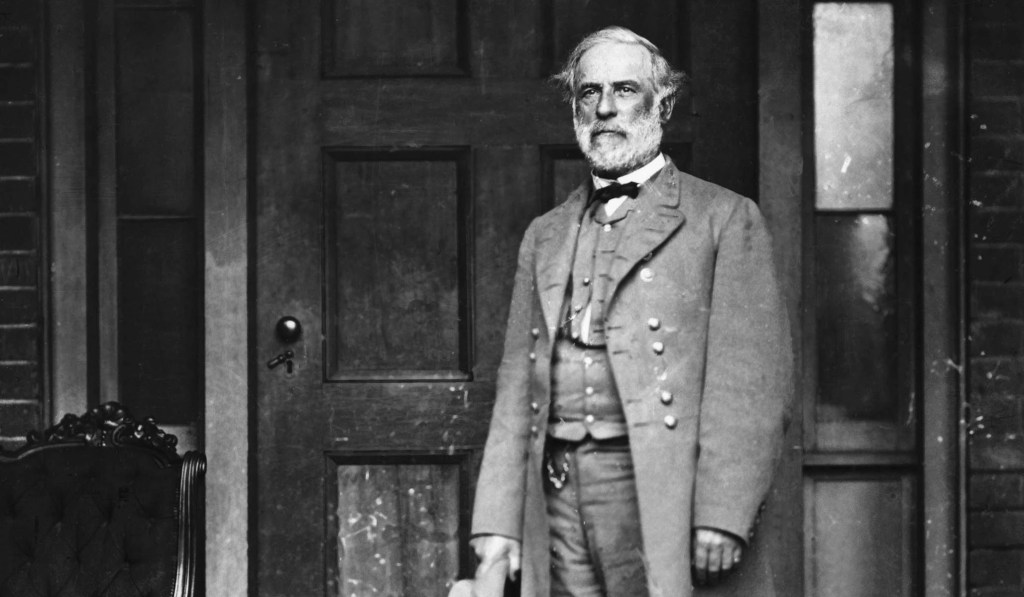
    The Legacy of Robert E. Lee

    No figures in American history earn universal admiration. As years—and generations—pass, legacies change. As morals, priorities, and political issues evolve, so do understandings of those people in the past who brought change—good, bad, or otherwise—to the country. For some figures, like Abraham Lincoln, whose authentic genius is admired generation after generation, their merit is questioned only by those who unreasonably say the great should have been greater. For others, it becomes much more varied and nuanced, and for Robert E. Lee, his legacy has always differed depending on the part of the country where his legacy is measured and the tenor of the moment. This is because, perhaps more than even Confederate President Jefferson Davis, Lee became a symbol of the Confederacy—with all its ills but also its potential for what might have been.

    (more…)
  • Constitution Sunday: “Publius,” The Federalist XXXIX [James Madison]

    Constitution Sunday: “Publius,” The Federalist XXXIX [James Madison]

    Independent Journal (New York)

    January 16, 1788

    The power of a government—and the supremacy of that power—often is tied to the ways in which it can reach the people’s lives. A federal government inherently raises concerns about overreach, and the draft Constitution’s proposed federal government evoked a question of whether it would be an all-powerful national government, sitting in the nation’s capital and presiding over the country’s affairs—distant though they may be from those holding power. James Madison, writing under the pen name Publius, explained that the proposed government was a blend of a federal and national one and therefore was worthy of Americans approving it.

    (more…)
  • Constitution Sunday: Rawlins Lowndes and Edward Rutledge Debate in the South Carolina Legislature

    January 16, 1788

    A government must provide its people—all of its people, varied as they are—with a structure that fosters self-preservation. In the South, for a long stretch of time, that sense of self-preservation was crucial. There was no denying that the slave economy was central to its existence that it was therefore always going to have tension with northern states. This was as true in 1788 as in 1861. And in 1788, there was rampant, raging debate surrounding the draft Constitution. In South Carolina’s legislature, two men—Rawlins Lowndes and Edward Rutledge—debated the merits of that draft, taking different sides on whether it warranted adoption.

    (more…)
  • Constitution Sunday: On The Likely Failure Of Liberty, Robert Yates and John Lansing, Jr., to Governor George Clinton

    Constitution Sunday: On The Likely Failure Of Liberty, Robert Yates and John Lansing, Jr., to Governor George Clinton

    January 14, 1788

    Daily Advertiser (New York)

    Revising the Articles of Confederation was always going to be a difficult task. The system that the Articles erected was one where the states pulled the strings of a marionette puppet of a federal government; without the states, the federal government was nothing: for instance, although the Confederation Congress could impose a tax, it lacked any independent power of enforcement and would need unanimous approval of the state legislatures. Nonetheless, when delegates met in Philadelphia in a convention that resulted in the draft Constitution, they had originally set out to revise those Articles of Confederation, and, by amendment, to refine the existing system into a more functional, more effective government.

    (more…)
  • Constitution Sunday: John Hancock’s Final Observation

    February 6, 1788

    Massachusetts Ratifying Convention

    At the conclusion of the Massachusetts Ratifying Convention, John Hancock requested to “close the business with a few words.” He began with an endorsement: the Constitution—amended or not—was destined to deliver political freedom and dignity to the country. This was particularly so given the exhaustive debate that the draft Constitution fostered all of which tended to improve the proposed government.

    (more…)
  • Constitution Sunday: Nathaniel Barrell, a “Plain Husbandman,” Warns of the Passion for Power, but Favors Ratification

    February 5, 1788

    Massachusetts Ratifying Convention

    The draft Constitution had its parts that inspired and other parts that terrified. Nathaniel Barrell, either as a sign of his modesty or as a way to relate to his fellow residents of Massachusetts, claimed that he would not speak with the eloquence of a Cicero but would articulate his objections to the Constitution.

    (more…)