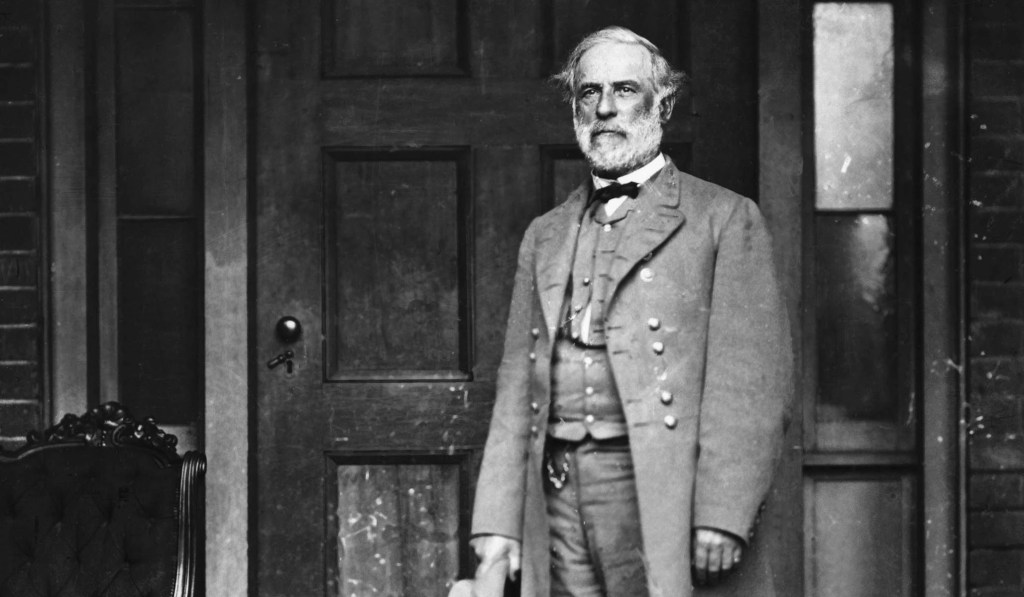
No figures in American history earn universal admiration. As years—and generations—pass, legacies change. As morals, priorities, and political issues evolve, so do understandings of those people in the past who brought change—good, bad, or otherwise—to the country. For some figures, like Abraham Lincoln, whose authentic genius is admired generation after generation, their merit is questioned only by those who unreasonably say the great should have been greater. For others, it becomes much more varied and nuanced, and for Robert E. Lee, his legacy has always differed depending on the part of the country where his legacy is measured and the tenor of the moment. This is because, perhaps more than even Confederate President Jefferson Davis, Lee became a symbol of the Confederacy—with all its ills but also its potential for what might have been.
(more…)Tag: George McClellan
-

The Legend of Winfield Scott Hancock
War heroes earn respect through their service. The Civil War brought out more heroes than perhaps any other war in American history. They were men who served their country at its inflection point, and they could be assured that their time on the battlefield could translate to time in public office. General Winfield Scott Hancock was but one example. He was “a patriotic hero, a stainless gentleman, and an honest man.”[i] He became one of the greatest Generals in the war: one that the soldiers, officers, and citizens were glad to have. He got out from under a famous name and created his own legacy, becoming a regular name in the wartime newspapers. But there was still a question of whether his post-war career would be as glamorous as his time during the war. Although he had a reputation for “honest heroism and personal character,” he was a Democrat; and at a time when Democrats simply could not expect to win the Presidency.[ii]
(more…) -
The Election of 1864
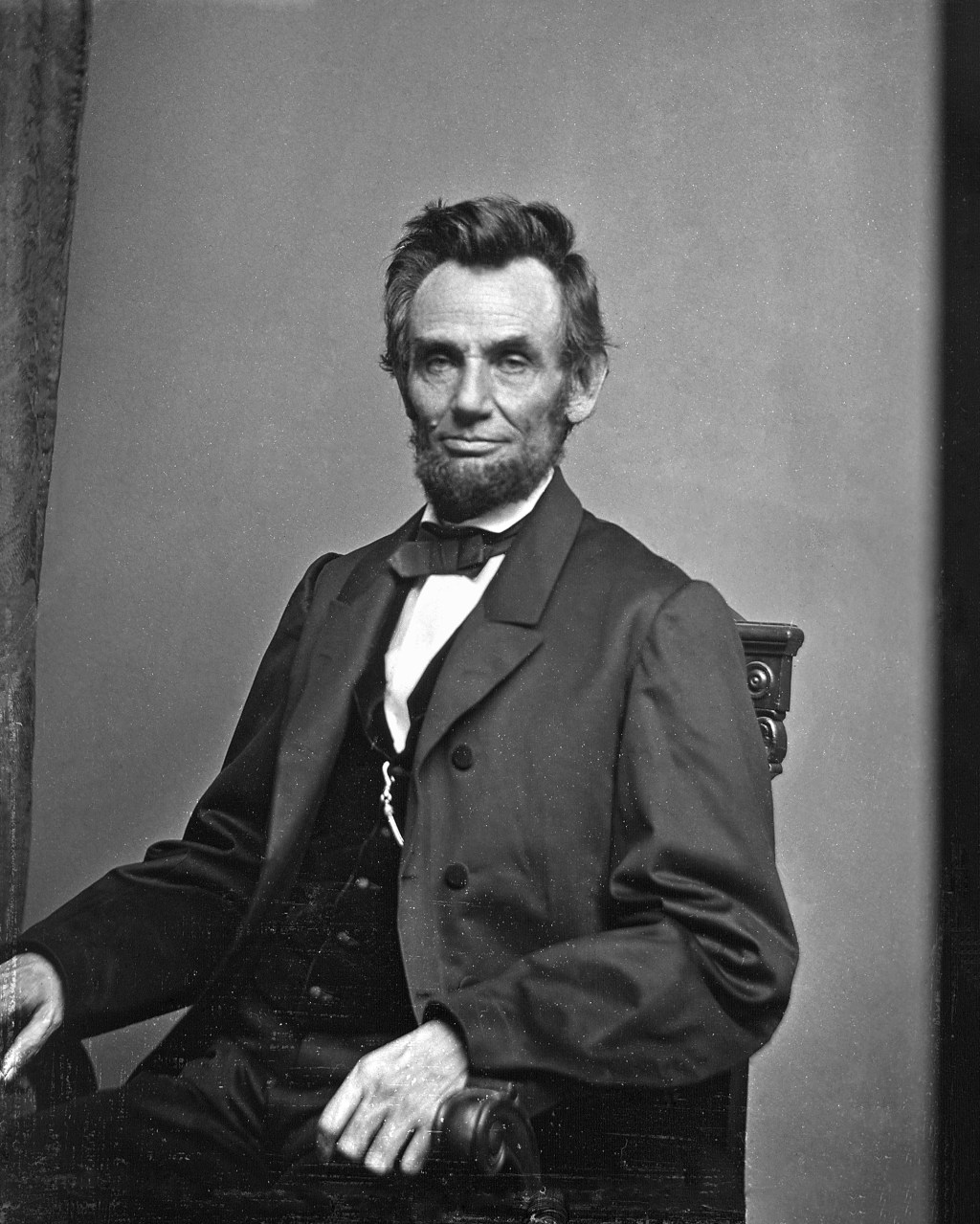
The summer of 1864 was one of dismay for President Abraham Lincoln and his administration: throughout the Union, the appetite for war had rapidly shrunk; particularly as compared to the heady days of 1860 that ushered Lincoln into the White House. While some voters in the North saw the continued prosecution of the war as nothing more than an attempt to manifest Lincoln’s wish to abolish slavery—and therefore a war not worth fighting—others had naturally, in view of the mounting casualties, developed a fatigue for war and, if they had a choice in the matter, would have opted for a negotiated peace. If Lincoln were to lose the election—so the argument ran—then families could be reunited and the violence could come to an end. For Confederates, northern voter despair was precisely the ingredient that was needed in the giant pot that was political discourse in the Union, but it was not all that was needed: the rebels had dreamt of forcing a negotiated peace, and now, with the election in sight, they had hope that Lincoln would be voted out and the war could be brought to a favorable end. (more…)
-

The Taking of Atlanta
According to Confederate President Jefferson Davis, the fall of Atlanta into Union hands would “open the way for the Federal Army to the Gulf on the one hand, and to Charleston on the other, and close up those rich granaries from which Lee’s armies are supplied. It would give them control of our network of railways and thus paralyze our efforts.”[i] The strategic location of the city was only one of several reasons for the Confederates to hold it: Atlanta had seen tremendous growth during the war with “foundries, factories, munitions plants, and supply depots” having sprung up on account of the city becoming a railroad hub.[ii] Capturing the city became the primary goal of Union General William Tecumseh Sherman, but, because the rebels had come to see the city as being second only to Richmond as a “symbol of resistance and nationality,” the campaign to Atlanta was almost certain to be easier than taking Atlanta.[iii] (more…)
-
The Battle of Cold Harbor
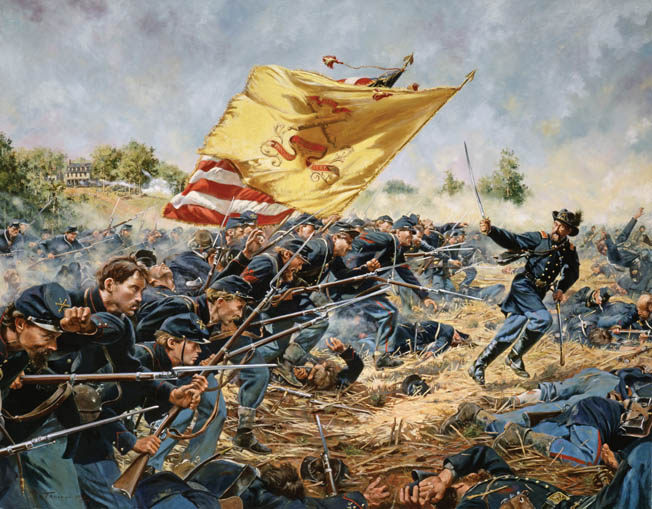
Within a dozen miles of Richmond sat the dusty crossroads of Cold Harbor. The town, with its tavern and “triangular grove of trees at the intersection of five roads,” would be the next stop in Ulysses S. Grant’s Overland Campaign in Virginia to defeat Robert E. Lee. There, approximately 109,000 Union troops sat ready to take on around 59,000 entrenched rebels.[i] The battle was likely to only be a continuation of the “relentless, ceaseless warfare” that had characterized Grant’s campaign into Virginia throughout 1864, and in Grant’s mind, he felt that “success over Lee’s army” was “already assured.”[ii] (more…)
-

The Battle of Gettysburg
By the spring of 1863, the Union had given the Confederacy every reason to remain defensive: for the duration of the war, federal troops had invaded points throughout the south forcing the rebels to shift to the location of each incision. Allowing this dynamic to continue to play out meant the only way for a Confederate success was a negotiated peace. On May 15, the southern brain trust, including General Robert E. Lee and President Jefferson Davis, convened in Richmond to discuss strategy. Lee proposed that he lead an effort that would remove the threat to Richmond, throw the Yankees on their heels, spell political doom for the Republicans (led by Abraham Lincoln in the White House), open up the possibility of Britain or France recognizing the Confederacy, and, at worst, an armistice that resulted in the Confederate States of America coexisting with the United States.[i] While Postmaster-General John Reagan and other Confederates felt that Lee should have sent troops to protect Vicksburg and the west from the trouble Ulysses S. Grant and his men were causing, Lee did not want to oblige the Confederacy to remain on the defensive but instead introduce the “prospect of an advance” as it would change “the aspect of affairs.”[ii] (more…)
-
The Battle of Chancellorsville
Joseph Hooker, at the head of the Army of the Potomac, was filled with confidence that he would not suffer the same fate as previous Union commanders facing Confederate General Robert E. Lee. While General Ambrose Burnside and General George McClellan earned their soldiers’ admiration with their leadership, they respectively fell at Fredericksburg and during the Peninsula Campaign and appeared to lack the incisive strategy to defeat Lee. (more…)
-
The Emancipation Proclamation
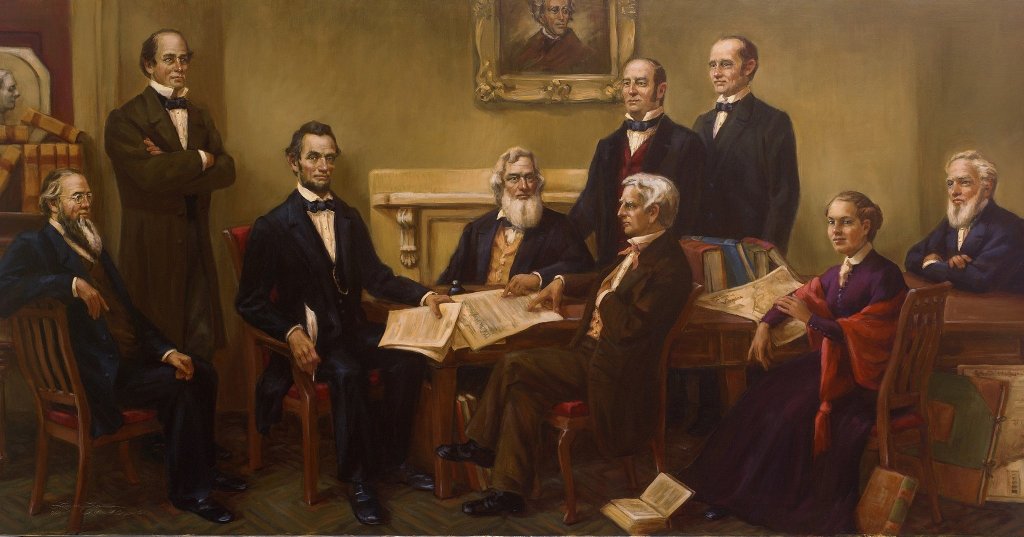
American history is replete with instances of the public pressuring a president to take action on an issue. On far fewer occasions, presidents, through speaking to voters, calling for congressional action, or issuing executive orders, have risked political capital to lead the public to advance on a prominent issue. In the middle of 1862, President Abraham Lincoln convened his Cabinet to discuss taking action on an issue that had been consuming him for weeks but was likely to endanger his bid for reelection in 1864 and was certain to change the direction of the ongoing and increasingly bloody Civil War. (more…)
-
The Battle of Fredericksburg
Throughout 1862, the Union embraced a defensive, passive approach to prosecuting the Civil War—shying away from incisive troop movements and relentless pursuits even after battles that left Confederates fatigued and fleeing—while the Confederacy had most recently displayed its more aggressive strategy by its attack near the Antietam Creek in Maryland. At the helm of the Union army, and the epitome of its quiescent nature, stood General George McClellan: a man who had come under fire for his failed Peninsula Campaign and refusal to pursue Confederate General Robert E. Lee after the Battle of Antietam. The latter decision prompted action from the White House. President Abraham Lincoln, whom McClellan had labeled as the “Gorilla,” replaced McClellan with General Ambrose E. Burnside on November 7, 1862.[i] (more…)
-
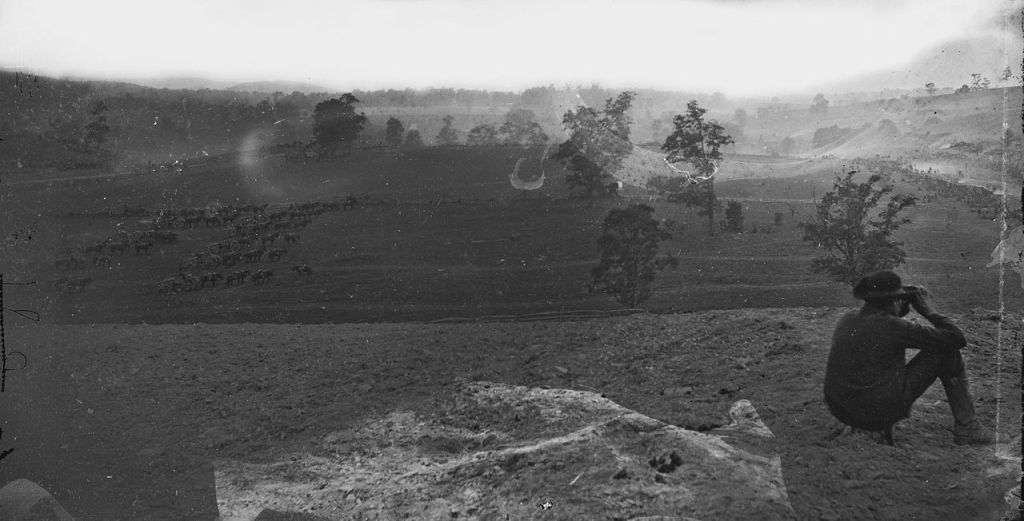
The Battle of Antietam
Years before the Civil War started, Harpers Ferry, Virginia was the site of a federal armory that abolitionist John Brown raided with the hope of starting a revolution, causing distress throughout the Union that a revolution was in the making. In September 1862, Harpers Ferry became a thorn in the Union side yet again as Confederate General Stonewall Jackson raided and easily captured the town which occupied a strategically important position: the intersection of the Shenandoah and Potomac Rivers. After taking the town, Jackson and his men advanced toward Sharpsburg, Maryland and the bubbling Antietam Creek flowing past the outskirts of Sharpsburg.[i] (more…)
 Last Best Hope of Earth