Tag: James Buchanan

  • The Civil War: Abraham Lincoln to John A. Gilmer

    Springfield, Illinois

    December 15, 1860

    The outgoing president, James Buchanan, had delivered his lukewarm message of unity to the country. South Carolina wasn’t swayed; she continued her efforts to secede. The incoming president, Abraham Lincoln, had the opportunity to send to the country his own statement. Perhaps he still could save the Union without a war.

    (more…)
  • The Civil War: James Buchanan: From the Annual Message to Congress

    The Civil War: James Buchanan: From the Annual Message to Congress

    December 3, 1860

    Washington City

    James Buchanan was never going to avert the Civil War. But in his annual message to Congress, after the election of 1860, he scarcely even tried. Whereas most outgoing presidents use their last days in power to begin shaping their legacy, reflect on their time at the helm, and share their unique perspective on the country—and on the world—Buchanan was not like most outgoing presidents.

    (more…)
  • The Election of 1884

    The Election of 1884

    The Democratic Party was in turmoil. Its candidates were not winning, and many of its ideas had fallen out of favor. It was a long way from the days of the Party’s founding: Andrew Jackson and his disciple, Martin Van Buren, held power for the twelve years spanning 1829 to 1841 and—into the 1840s and 1850s—James Polk, Franklin Pierce, and James Buchanan continued to lead the Party into the White House albeit against candidates from the newly-formed and then soon-to-be-disbanded Whig Party. Then, following the emergence of the Republican Party—an emergence which culminated in its candidate, Abraham Lincoln, prevailing in the elections of 1860 and 1864—Andrew Johnson, Lincoln’s Vice President and then successor as President, oversaw a one-term presidency which came to an end in 1869. Johnson, partly because he was serving between two titans of the century (Lincoln and Civil War hero Ulysses S. Grant), was always going to struggle to earn admiration but, unlike Lincoln and Grant, Johnson was technically a Democrat, and perhaps because he was so thoroughly shamed for his actions as President, the Party would scarcely recognize him as a member. Whether a result of Johnson’s malfeasance or not, following Johnson’s presidency came an era of Republican dominance: Republican Grant won two consecutive terms, Republican Rutherford B. Hayes secured a succeeding term, Republican James Garfield then was victorious, and following his assassination, Republican Chester Arthur served out the remainder of that term. That brought the parties and the country to 1884. As the election of 1884 approached, it had been decades since a strong, effective Democrat—a Democrat who embodied the Party’s principles and would be a standard bearer for the Party, unlike the postbellum Democratic President, Johnson, or the last antebellum one, Buchanan—held office, and for Democrats to win this election, it would take someone special; someone who would be transformative even if only in a way that was possible at the time. As fortune would have it, it could not be a wartime presidency or a presidency that birthed fundamental change in American government, but that was because the circumstances of the era did not call for such a President; it could, however, be a presidency that tackled one of the biggest issues of the time: corruption.

    (more…)
  • The Preparedness of the Union and Confederacy

    The Preparedness of the Union and Confederacy

    At the outset of the Civil War, the discrepancies between the Union and Confederate armies were evident. Despite their differences in background and appearance, both sides were poised to not only revolutionize the American method of warfare but also to change life for civilians throughout the country. (more…)

  • The Inauguration of Abraham Lincoln

    The Inauguration of Abraham Lincoln

    From the time of the Election of 1860 to the beginning of Abraham Lincoln’s presidency, there was uncertainty as to how Lincoln and his administration would handle the growing Confederacy and existential crisis facing the country.  (more…)

  • The North’s Attempt at Salvation

    washington-dc
    Aerial Perspective of Washington DC in 1861.

    The Deep South’s animating of a Second American Revolution, by seceding from the Union and laying the foundation for an operational Confederate government, forced the North to either suppress the South’s uprising or craft a resolution. The likelihood of war would deter any widespread northern suppression, leaving the question: What compromise could the North propose that appeased the South and put both sections of the country on a path of coexistence? While variations of this question had been posed in the years leading up to 1860, at no prior point were states seceding from the Union en masse to form a rival government. (more…)

  • The Secession of the Deep South

    secession-hall-583x600
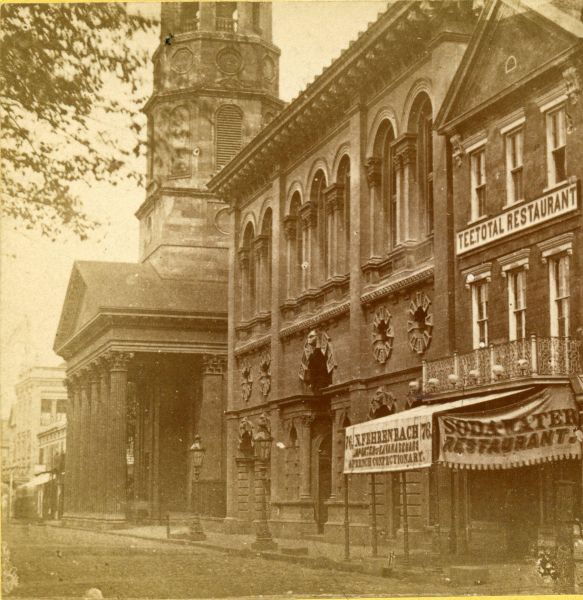
    Secession Hall in Charleston, South Carolina. Credit: The Civil War Trust.

    In the wake of the disconcerting result of the Election of 1860, the nature of southern secessionism suggested the imminent secession of at least some southern states from the Union. The timing and execution of states actually seceding from the Union was unclear, but the Deep South was prepared to act first. (more…)

  • The Election of 1860

    1860photo_uscapitol_washingtoncanalvisiblie
    The United States Capitol in 1860. Courtesy: Library of Congress

    Every presidential election is consequential, but the Election of 1860 would play a significant role in whether the United States would remain one nation. The division of the North and South on the issue of slavery threatened to cause a secession of the South. The result of the election would determine whether that threat would materialize and cause a Second American Revolution. (more…)

  • The Obstinacy of the North and South

    enhanced-28733-1444703692-1
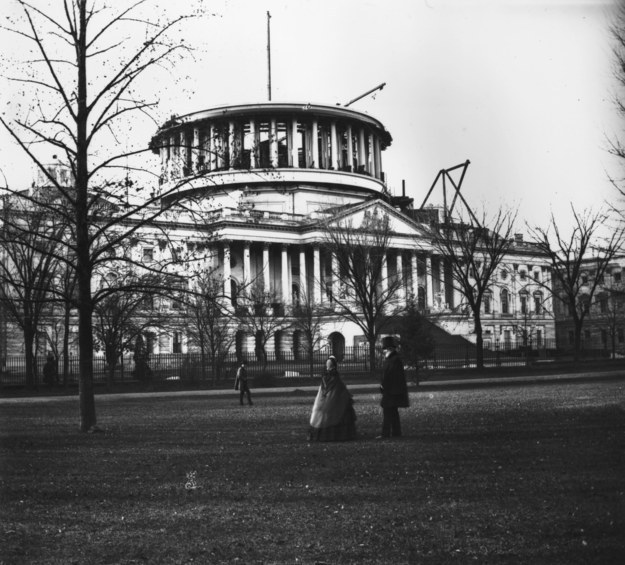
    Construction on the Capitol in 1859. Courtesy: William England, Getty Images.

    By 1859, the northern and southern sections of America had developed different economic systems, cultural norms, and approaches to permitting slavery. Congress and the political parties had been able to overlook those differences for the sake of self-preservation and advancement of the collective agenda. As 1859 concluded and 1860 sprang, Americans understood that the status quo of compromise was not to continue much longer. (more…)

  • The Raid on Harpers Ferry

    82590-004-346616d5
    Depiction of the Raid on Harpers Ferry.

    For the bulk of the early 19th Century, slaveholders in the South had a deep fear that a slave revolt would erupt and metastasize, leading to an eradication of the institution, similar to what happened in Haiti in the first years of the 19th Century. In 1859, John Brown, one of the instigators in Bleeding Kansas, would attempt to lead such a revolt, starting at a federal armory in Harpers Ferry, Virginia. The immediate effects of his raid would pale in comparison to its impact over the course of the following two years. (more…)