Tag: James Madison

  • Constitution Sunday: “Publius,” The Federalist XXXVII [James Madison]

    “Publius,” The Federalist XXXVII [James Madison]

    Daily Advertiser (New York), January 11, 1788

    In the course of human history, there have been innumerable types of governments—all of which serve as examples for those seeking to devise their own system of government. When the Constitutional Convention gathered, there was consensus that the Articles of Confederation would no longer suffice, but it remained unclear what direction the convention should go when drafting its Constitution. James Madison, writing under the name Publius, detailed the monumental task that the convention assigned itself.

    (more…)
  • The Inauguration of William Henry Harrison

    rembrandt_peale_-_william_henry_harrison_-_google_art_project
    William Henry Harrison. By: Rembrandt Peale.

    William Henry Harrison, a Whig, won the White House in the election of 1840. In March 1841, for his inauguration, he stood in the cold and wind and spoke for an hour and a half. See Daniel Walker Howe, What Hath God Wrought: Transformation of America, 1815-1848, 570.

    (more…)

  • A First Test for Separation of Church and State

    cholera-1832
    A Depiction of the Cholera Outbreak in New York City in 1832.

    With the communications and transportation revolution came new, unforeseeable consequences. One such consequence was the spread of cholera and other contagious diseases, which would test the mettle of Americans.

    (more…)

  • Constitution Sunday: Jefferson Replies to Madison

    011914efc09968f8736c1d523526ff1a Read today’s Constitution Sunday in Russian.

    Thomas Jefferson Replies to Madison

    Paris, December 20, 1787

    Following are excerpts from Thomas Jefferson’s letter to James Madison:

    “I like the power given the Legislature to levy taxes, and for that reason solely approve of the greater house being chosen by the people (more…)

  • The Fort Hill Address

    Personalities AE  6
    John Calhoun.

    John Calhoun, by 1831, had alienated himself from President Andrew Jackson, and he wanted to “head off talk of secession,” and on July 26, 1831, he published his “Fort Hill Address” in a South Carolina newspaper. Daniel Walker Howe, What Hath God Wrought: Transformation of America, 1815-1848, 399.

    (more…)

  • Constitution Sunday: Letter from James Madison to Thomas Jefferson

    Letter from James Madison to Thomas Jefferson

    New York, October 24, 1787

    Following are excerpts from James Madison’s letter to Thomas Jefferson, dated October 24, 1787:

    “It remains then to be enquired whether a majority having any common interest, or feeling any common passion, will find sufficient motives to restrain them from oppressing the minority. (more…)

  • The Tariff of Abominations

    Painted Portrait Of Martin Van Buren
    Martin Van Buren.

    Both President John Quincy Adams and Henry Clay were of the mindset that much could be accomplished in developing the American economy with the help of the government. Martin Van Buren had different ideas, however.

    (more…)

  • The Transportation Revolution

    BF9078F5-155D-451F-6702CDB371CB71CD
    Depiction of the Building of the National Road.

    Following the end of the War of 1812, the United States underwent a transportation revolution. This transportation revolution came about as a result of Americans moving westward but also as more Americans moved into cities to engage in industrial work. Daniel Walker Howe, What Hath God Wrought: Transformation of America, 1815-1848, 212. (more…)

  • The Conquest of the Floridas

    gv52100
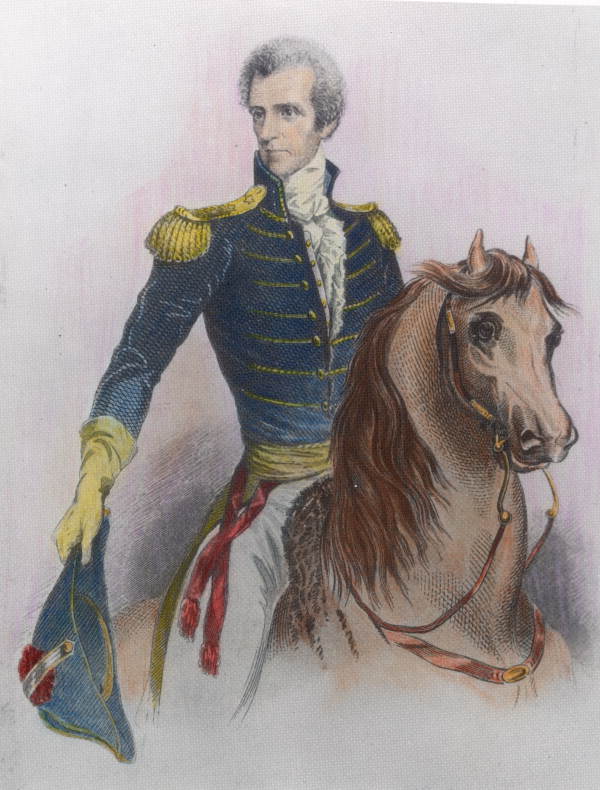
    Engraving of Andrew Jackson.

    East and West Florida, property of the Spanish Empire, had become coveted land for America in the early 1800s. It could lend a strategic stronghold for America and open up the Pearl, Perdido, and Apalachicola Rivers to commercial trade. Daniel Walker Howe, What Hath God Wrought: Transformation of America, 1815-1848, 97.

    (more…)

  • The Defeat of the Bonus Bill

    james_madison_by_chester_harding_1829_img_4295
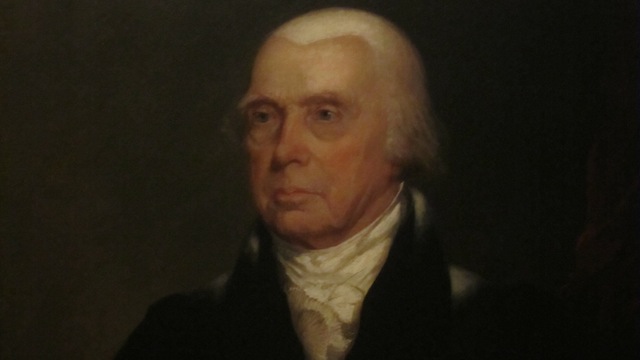
    James Madison. By: Chester Harding.

    Following the War of 1812, President James Madison was proudly touting the status of America. It had mobilized its navy to protect trade in the Mediterranean Sea, it had reestablished commercial relations with Britain, and it had pacified the Native Americans. See Daniel Walker Howe, What Hath God Wrought: Transformation of America, 1815-1848, 80.

    (more…)