
In 1864, as the election neared, President Abraham Lincoln, a Republican, wagered that his re-election prospects depended on having a unity ticket: rather than choose a fellow Republican for the nomination for Vice President, he opted for a War Democrat and southerner, Andrew Johnson. With Johnson being from the South, condemning the Confederacy, and supporting the prosecution of the Civil War without negotiated peace—unlike the faction in his party known as the Copperheads (which called for immediate peace negotiations with the Confederacy)—he served as a useful balance to the Republican, Lincoln, whose party was increasingly vocal about abolition and subjugating the South, political issues that chilled some parts of the electorate to Lincoln. By 1868, much had changed. Lincoln had been assassinated, Johnson had poorly navigated Washington politics (and had come to within one vote of the Senate removing him from the presidency), and Ulysses S. Grant had continued his meteoric rise in popularity. There was little doubt that Grant would be the Republican nominee; he was one of the most popular Americans of the 1860s and would remain so for the duration of the 19th Century. The bigger questions were who the Democratic Party would choose as its nominee and whether that nominee would have a chance at becoming the first Democrat elected to the Presidency in twelve years—when James Buchanan won the election of 1856. (more…)
Tag: Salmon Chase
-
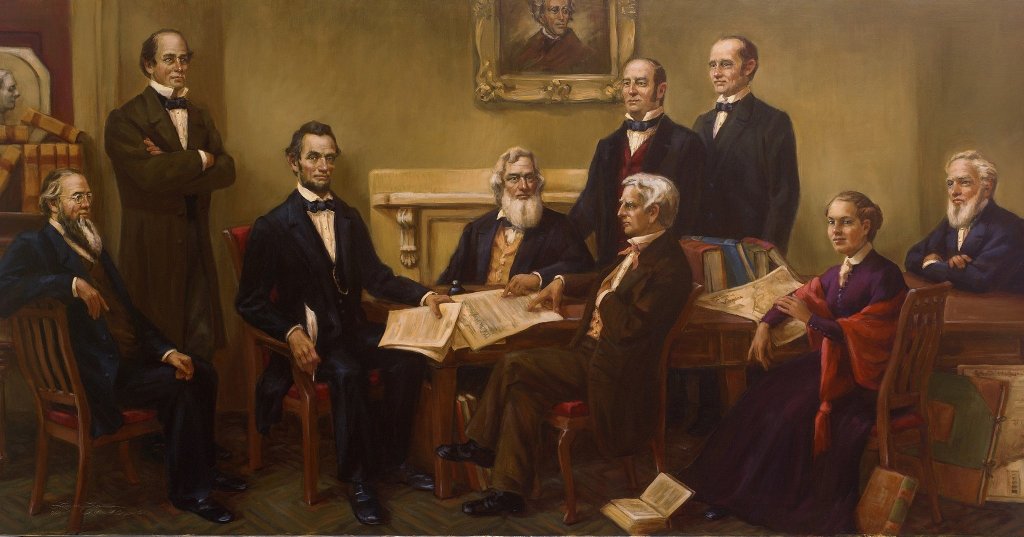
The Emancipation Proclamation
American history is replete with instances of the public pressuring a president to take action on an issue. On far fewer occasions, presidents, through speaking to voters, calling for congressional action, or issuing executive orders, have risked political capital to lead the public to advance on a prominent issue. In the middle of 1862, President Abraham Lincoln convened his Cabinet to discuss taking action on an issue that had been consuming him for weeks but was likely to endanger his bid for reelection in 1864 and was certain to change the direction of the ongoing and increasingly bloody Civil War. (more…)
-

Preparing for Invasion

Abraham Lincoln Meeting with His Cabinet in 1862. By: Francis Bicknell Carpenter. From the Union perspective, the dawn of 1862 presented as good an opportunity as ever for an attack on Richmond. If successful, it could force the Confederacy into surrendering and negotiating its reconciliation with the federal government with the only question being the extent of the retribution for secession. However, to be a successful strike on the Confederate capital, Abraham Lincoln must have known that military leadership as well as his administration heads would need to flawlessly execute a plan. This was particularly true given the Confederacy’s posture in the war: one that was entirely comfortable maintaining the status quo of defending its territory from the aggressor. (more…)
-
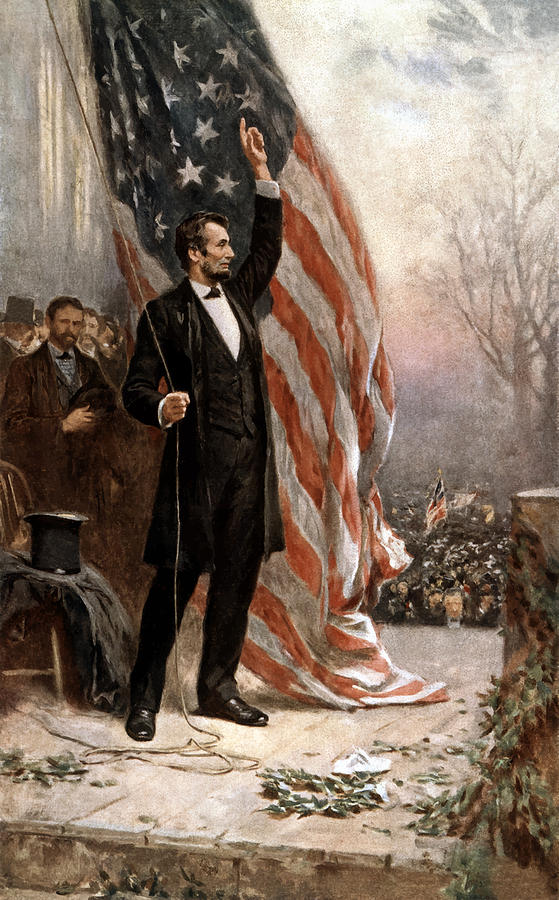
The Inauguration of Abraham Lincoln
From the time of the Election of 1860 to the beginning of Abraham Lincoln’s presidency, there was uncertainty as to how Lincoln and his administration would handle the growing Confederacy and existential crisis facing the country. (more…)
-
The Election of 1860
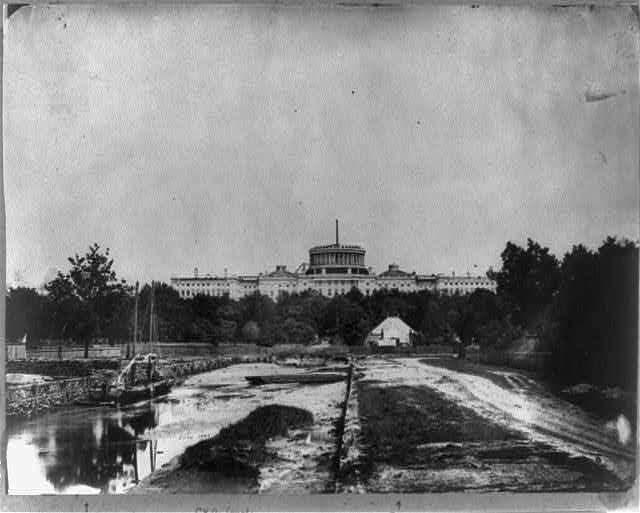
The United States Capitol in 1860. Courtesy: Library of Congress Every presidential election is consequential, but the Election of 1860 would play a significant role in whether the United States would remain one nation. The division of the North and South on the issue of slavery threatened to cause a secession of the South. The result of the election would determine whether that threat would materialize and cause a Second American Revolution. (more…)
-
The Kansas-Nebraska Act

Construction of the Transcontinental Railroad. In 1844, Asa Whitney, a merchant in New York, proposed that a transcontinental railroad be built. While he hoped to lead the construction of the railroad and reap the benefits of the ambitious project, that was not to be. However, three components of his plan captured the spirit of Americans toward the construction of the railroad: “There must be a railroad to the Pacific; it must be financed by grants of public lands along the route; and it must be built by private interests which received these grants.” David Potter, The Impending Crisis: America Before the Civil War, 1848-1861, 146. (more…)
-
The Compromise of 1850
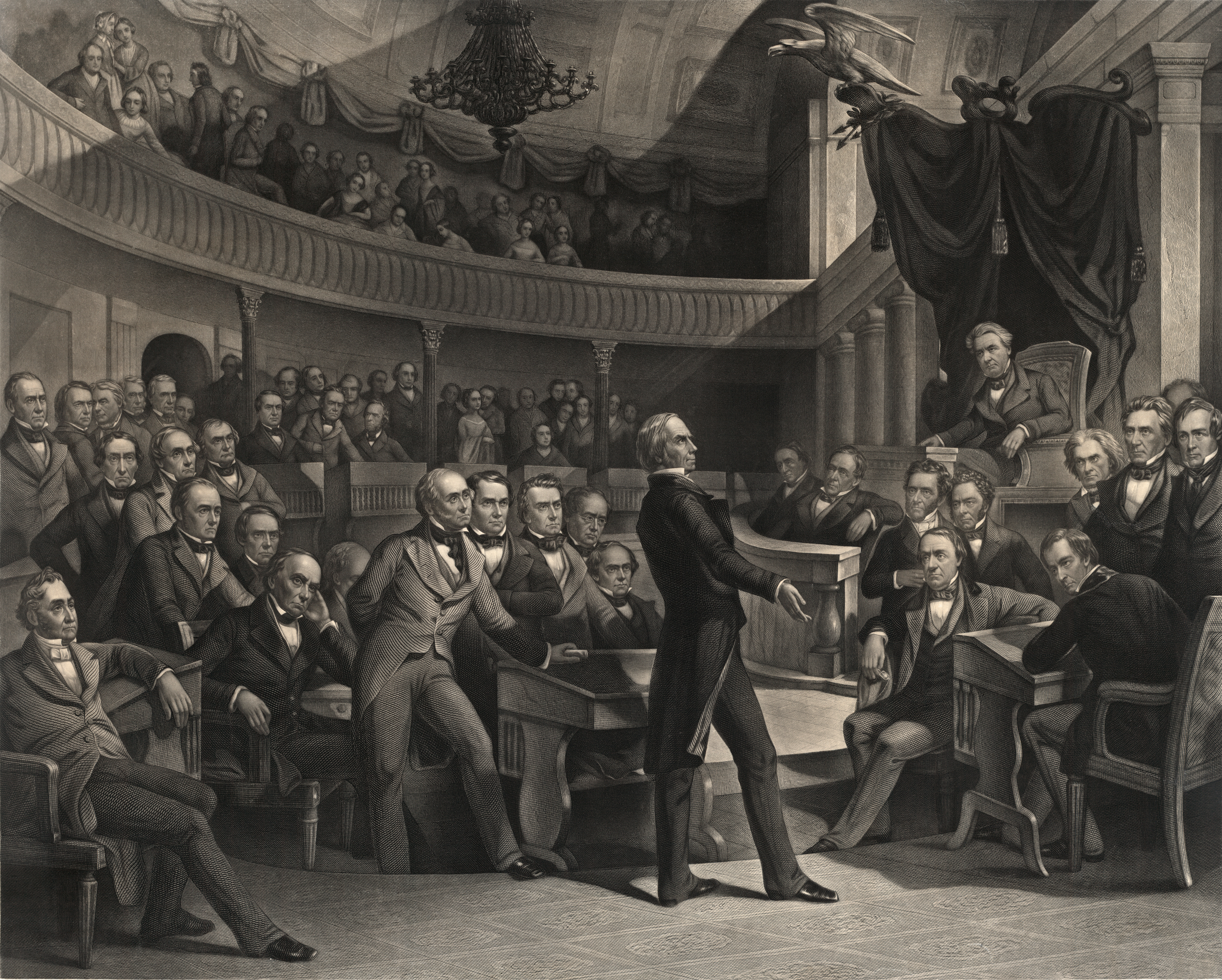
“United States Senate, A.D. 1850.” By: Peter F. Rothermel. Upon President Zachary Taylor taking office, he sent a message to Congress deploring the sectionalism that was pervading the country. See David Potter, The Impending Crisis: America Before the Civil War, 1848-1861, 91. He looked to George Washington’s warnings against “characterizing parties by geographical discriminations,” which appeared by 1849 to be a prescient warning. Id. citing James D. Richardson, ed., A Compilation of the Messages and Papers of the Presidents (11 vols.; New York, 1907), V, 9-24. President Taylor offered hope for northerners and those Americans who wanted to preserve the Union with his vow: “Whatever dangers may threaten it [the Union] I shall stand by it and maintain it in its integrity.” David Potter, The Impending Crisis: America Before the Civil War, 1848-1861, 91 citing James D. Richardson, ed., A Compilation of the Messages and Papers of the Presidents (11 vols.; New York, 1907), V, 9-24. (more…)
 Last Best Hope of Earth