December 17, 1860
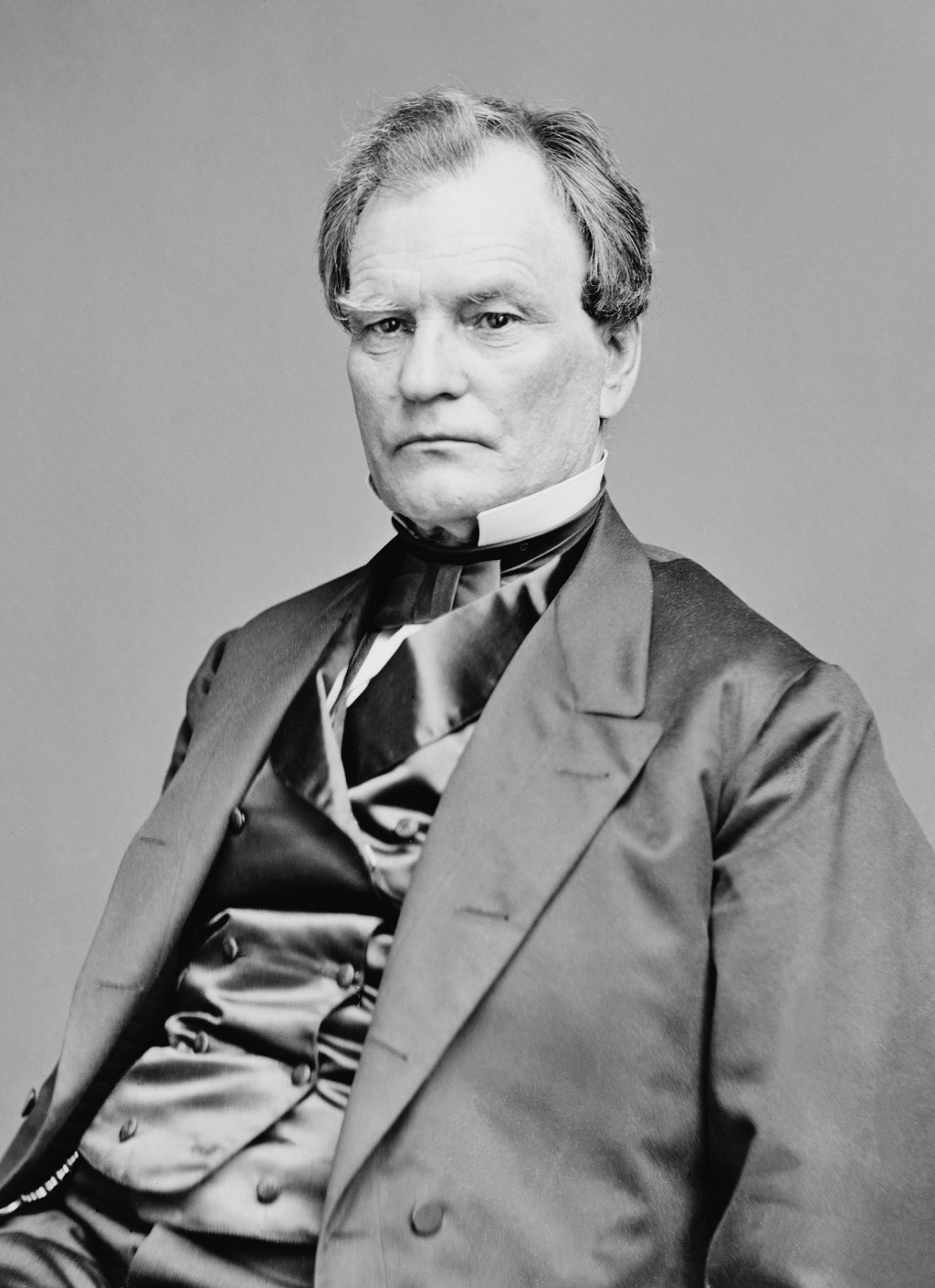
Benjamin Wade, a Republican Senator from Ohio, rose to speak in the Senate. There were murmurs abound of averting the crisis—of stopping states from seceding from the Union. Some talked of forming a committee to explore the potential for a compromise between northern and southern states, even though no one knew what contours such a compromise could take. After all, for decades, Congress had been encapsulating compromises into bills, presidents had been signing those bills into law, and none of the laws resolved the tensions between the states.
And it was in that context that Wade said no committee should have convened; the compromises of the past had taken many forms, were imaginatively crafted by intelligent, well-meaning men, had good intentions behind them—and all of them had failed. But this left a question as to what other choice people had if not to compromise.
Those in favor of secession were fond of saying that there was no longer any choice but to secede. Wade pointed out, however, that “everything remains precisely as it was a year ago.” There had been no “great catastrophe” or “recent occasion to accuse [those in favor of the Union] of anything.” Nonetheless, “seven or eight States” were preparing to break off and form a hostile government, and those in favor said to the Republicans and those in favor of maintaining the Union, “[Y]ou can prevent it; we can do nothing to prevent; but it all lies with you.” But those secessionists had “not even condescended to tell us what you want.”
In Wade’s view, the Democrats (and their candidate, John Breckinridge) as well as southerners who thought to secede based on Abraham Lincoln’s victory simply needed to accept the results of the election of 1860—disappointing though it was for them. The Democrats in the Senate had foretold that Lincoln’s victory would lead to overt acts against the South. Wade, observing that the Republicans had been faithfully executing all laws, addressed the Democrats: “It is not, then, that Mr. Lincoln is expected to do any overt act by which you may be injured; you will not wait for any; but anticipating that the Government may work an injury, you say you will put an end to it, which means simply, that you intend either to rule or ruin this Government.” And if that was the case, Wade asked, then why did the Democrats ever participate in the system and wait to secede only at this moment?
This moment came after the Democrats suffered a stinging electoral loss. The election of 1860 itself was about the issue of slavery; the parties went to the voters about it, and the voters chose Lincoln and the Republicans. Wade said:
“Although we have been usually in the minority; although we have been generally beaten, yet, this time, the justice of our principles, and the maladministration of the Government in your hands, convinced the people that a change ought to be wrought; and after you had tried your utmost, and we had tried our utmost, we beat you; and we beat you upon the plainest and most palpable issue that ever was presented to the American people, and one that they understood the best.”
Then, after a resounding electoral win, the Democrats still insisted that the Republicans should come to some compromise on the issue of slavery. Wade argued that no compromise was necessary; the Republicans had their mandate to govern, and they planned to govern. He said, “The moment the American people cut loose from the sheet anchor of free government and liberty—that is, whenever it is denied in this Government that a majority fairly given shall rule—the people are unworthy of free government.”
Wade then asked for candor from the other side: “if you had elected your candidate, Mr. Breckinridge, although we should have been a good deal disheartened, as everybody is that loses his choice in such a matter as this; although it would have been an overthrow that we should have deplored very much, as we have had occasion almost always to deplore the result of national elections, still do you believe that we would have raised a hand against the Constitution of our country because we were fairly beaten in an election?” The parties have their policy differences, as is inherent in political parties, “but when you talk of constitutional rights and duties, honest men will observe them alike, no matter to what party they belong.”
And it was preserving the Constitution that mattered most. “Under its provisions a nation has grown faster than any other in the history of the world ever did before in prosperity, in power, and in all that makes a nation great and glorious,” Wade said. It had ministered “to the advantages of this people,” and while it was not a document that should remain static, there was no basis for changing it at this juncture—let alone abandoning it, as the secessionists effectively sought to do.
Although Wade was for preserving the Union, he had conceived an idea of how that Union should be—a conception that was common in his time. Wade noted there were some in the Senate, such as Senator Stephen Douglas of Illinois, who had said that the Black Republican offshoot of the party wished to see “negro equality, and that we wanted to build up a black government.” Nonsense, Wade said. He went on: “we will make inducements for every free black among us to find his home in a more congenial climate in Central America or in Lower Mexico, and we will be divested of every one of them; and then, endowed with the splendid domain that we shall get, we will adopt a homestead policy, and we will invite the poor, the destitute, industrious white man from every clime under heaven, to come in there and make his fortune. So, sir, we will build up a nation, renovated by this process, of white laboring men.”
In his view, the northern society would build up a system that would be more prosperous and more vigorous than servile labor, and it would build a society that was harmonious with all sections of the country, including the South. For Wade, the difference between the sections of the country was the labor system. In his view, the country had common ground on its future in terms of equality—or the lack thereof. For him, and others like him, this only further illustrated why the northern and southern states should have avoided conflict.
 Last Best Hope of Earth
Leave a comment