-
Constitution Sunday: “Publius,” The Federalist LI [James Madison]
Independent Journal (New York) February 6, 1788 “But what is government itself but the greatest of all reflections of human nature?” This rhetorical question, which James Madison posed, is one that governments throughout the world—throughout history—have answered by showing that even the best-intentioned government fails where it does not take human nature into account.
-
The Civil War: Jefferson Davis: Message to the Confederate Congress
April 29, 1861 With only a few weeks at the helm of the Confederate government, president Jefferson Davis and the Confederate Congress had cause for concern—but also cause for inspiration. The whole of the South (and the whole of the North) was animated: men and women were mobilizing; making their preparations to contribute to the…
-
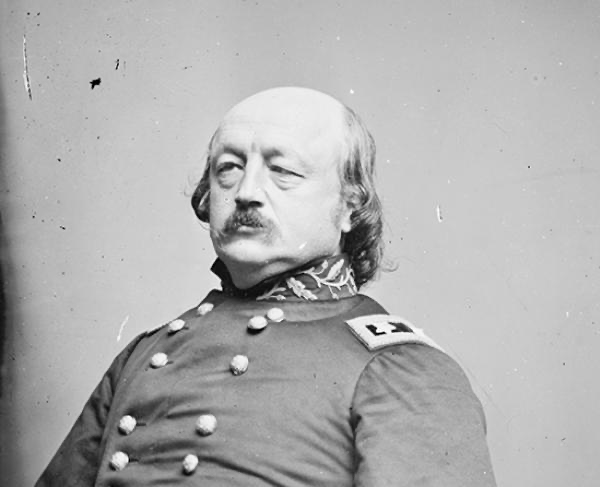
The Civil War: Benjamin F. Butler to Winfield Scott
One night in late May 1861, “three negroes”—who said they were field hands, slaves—delivered themselves to the picket line at Fort Monroe in Virginia. Fort Monroe, sat on the peninsula between the York River and James River, had at its helm Brigadier General Benjamin F. Butler. The fugitive slaves had come to the fort to…


-
The Civil War: William Howard Russell: from My Diary North and South
April 17, 1861 In the weeks and months leading up to the fall of Fort Sumter, the South had been brimming with excitement for the future. Charleston, South Carolina—with newly taken Fort Sumter in its harbor—was leading the South into that future both through its rhetoric and through its actions. Enthusiasm was abound for what…
-
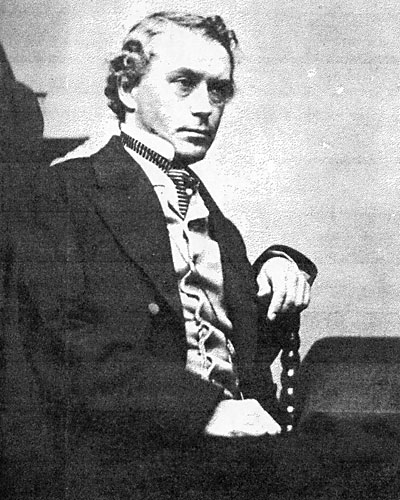
The Civil War: George Templeton Strong: Diary, April 13-16, 1861
Throughout the months leading up to the firing on Fort Sumter, there was widespread wonder about how the country would react to such a provocation; it was bound to be a cleave dividing the country and also its communities. Generations later—with the accordion of events neatly folded and the result of the war known—it would…
-

The Election of 1884
The Democratic Party was in turmoil. Its candidates were not winning, and many of its ideas had fallen out of favor. It was a long way from the days of the Party’s founding: Andrew Jackson and his disciple, Martin Van Buren, held power for the twelve years spanning 1829 to 1841 and—into the 1840s and…
-
Constitution Sunday: Fisher Ames on Biennial Elections and on the Volcano of Democracy
Massachusetts Ratifying Convention. January 15, 1788 The duration of a term for a member of the House of Representatives was a contentious issue: while some favored one-year terms, others—such as Fisher Ames—advocated for two-year terms. To Ames, a member of the House would be unlikely to learn enough about the country in a year to…
-
Constitution Sunday: Governor Samuel Huntington on the Need for Coercive National Power
Connecticut Ratifying Convention. January 9, 1788 When Connecticut’s Governor, Samuel Huntington, rose to speak at the state’s ratifying convention, he rose to second a motion by General Parsons to “assent to, ratify, and adopt the Constitution,” but in seconding the motion, Governor Huntington provided perspective and context for why he was asking the state’s delegates…
-
Constitution Sunday: Oliver Ellsworth defends the Taxing Power and Comments on Dual Sovereignties and Judicial Review
Connecticut Ratifying Convention January 7, 1788 When the Connecticut Ratifying Convention assembled, there were objections against the draft Constitution on the basis that it was “despotic” in its bestowing great power upon Congress: to the objectors, Congress having both the power of the purse and the power of the sword was intolerable. Oliver Ellsworth, however,…
-

Constitution Sunday: James Wilson’s Summation and Final Rebuttal
Pennsylvania Ratifying Convention. December 11, 1787 Before concluding the Pennsylvania Ratifying Convention, James Wilson delivered a closing argument for ratifying the draft Constitution and took on many of his adversaries’ best arguments while presenting the most compelling reasons for adopting the Constitution. To detractors of the Constitution, a most glaring flaw in the document was…

