-
Constitution Sunday: “Publius,” The Federalist LI [James Madison]
Independent Journal (New York) February 6, 1788 “But what is government itself but the greatest of all reflections of human nature?” This rhetorical question, which James Madison posed, is one that governments throughout the world—throughout history—have answered by showing that even the best-intentioned government fails where it does not take human nature into account.
-
The Civil War: Jefferson Davis: Message to the Confederate Congress
April 29, 1861 With only a few weeks at the helm of the Confederate government, president Jefferson Davis and the Confederate Congress had cause for concern—but also cause for inspiration. The whole of the South (and the whole of the North) was animated: men and women were mobilizing; making their preparations to contribute to the…
-
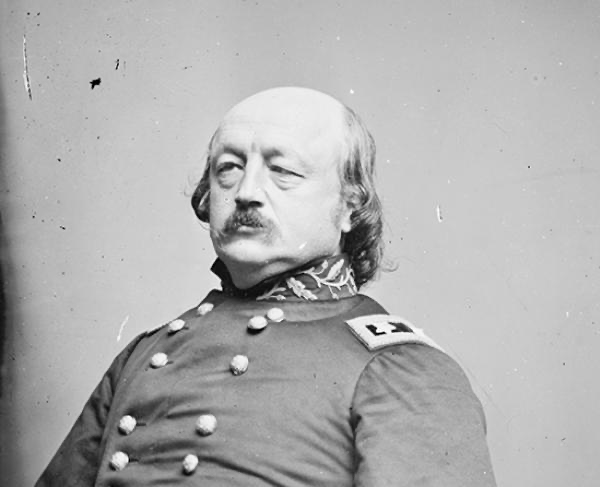
The Civil War: Benjamin F. Butler to Winfield Scott
One night in late May 1861, “three negroes”—who said they were field hands, slaves—delivered themselves to the picket line at Fort Monroe in Virginia. Fort Monroe, sat on the peninsula between the York River and James River, had at its helm Brigadier General Benjamin F. Butler. The fugitive slaves had come to the fort to…


-
The Civil War: William Howard Russell: from My Diary North and South
April 17, 1861 In the weeks and months leading up to the fall of Fort Sumter, the South had been brimming with excitement for the future. Charleston, South Carolina—with newly taken Fort Sumter in its harbor—was leading the South into that future both through its rhetoric and through its actions. Enthusiasm was abound for what…
-
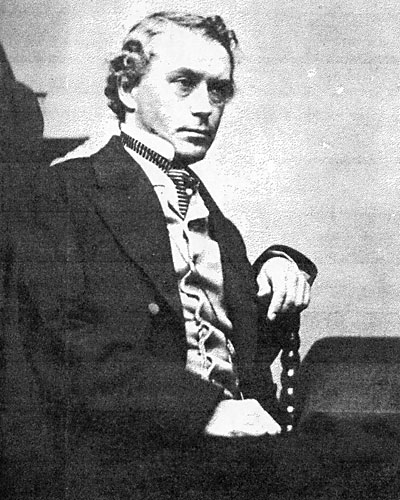
The Civil War: George Templeton Strong: Diary, April 13-16, 1861
Throughout the months leading up to the firing on Fort Sumter, there was widespread wonder about how the country would react to such a provocation; it was bound to be a cleave dividing the country and also its communities. Generations later—with the accordion of events neatly folded and the result of the war known—it would…
-
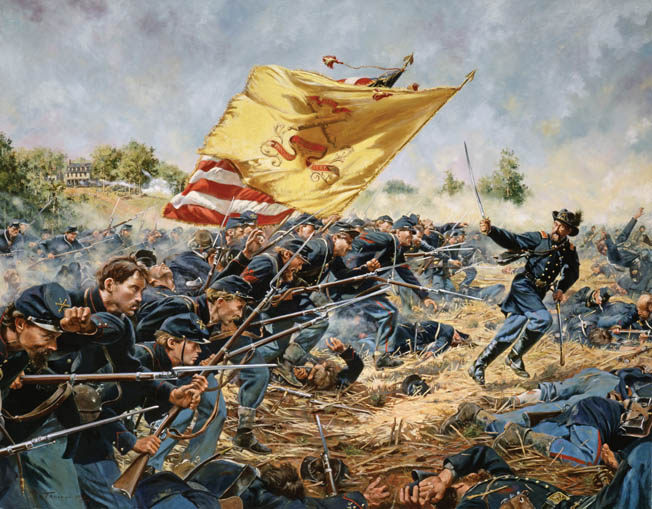
The Battle of Cold Harbor
Within a dozen miles of Richmond sat the dusty crossroads of Cold Harbor. The town, with its tavern and “triangular grove of trees at the intersection of five roads,” would be the next stop in Ulysses S. Grant’s Overland Campaign in Virginia to defeat Robert E. Lee. There, approximately 109,000 Union troops sat ready to…
-
Constitution Sunday: “Brutus” IV
“Brutus” IV New York Journal, November 29, 1787 At the heart of a healthy democracy is the power for people or their representatives to create, modify, or repeal the laws for those laws inevitably govern nearly all aspects of life. The New York Journal published an article that dissected fair representation in the proposed Constitution: “The…
-
The Battle of Spotsylvania Court House
At Spotsylvania, Virginia, within miles of the Confederate capital, the rebels had constructed the strongest defensive position yet in the war. Robert E. Lee, despite any evidence of a Union movement in that direction, presciently ordered his men to the town as it was the “best strategic point” for the federals.[i] Ulysses S. Grant, continuing…
-

The Battle of the Wilderness
By the spring of 1864, changes were abound on the Union side. Three generals—Ulysses S. Grant, William Tecumseh Sherman, and Philip Sheridan—had become the preeminent leaders of the northern army. With Congress having revived the rank of lieutenant general, a rank last held by George Washington, President Abraham Lincoln promoted Grant to that rank and…
-
The Battle of Chickamauga
Near the end of September 1863, Union General William Rosecrans had gathered his men in the valley of West Chickamauga Creek in Georgia, and Confederate General Braxton Bragg was preparing to attack the Union left flank and force a reversal into a nearby valley from which Rosecrans could not escape.[i] The maneuver would be the…
-

The Battle of Gettysburg
By the spring of 1863, the Union had given the Confederacy every reason to remain defensive: for the duration of the war, federal troops had invaded points throughout the south forcing the rebels to shift to the location of each incision. Allowing this dynamic to continue to play out meant the only way for a…

