-
Constitution Sunday: “Publius,” The Federalist LI [James Madison]
Independent Journal (New York) February 6, 1788 “But what is government itself but the greatest of all reflections of human nature?” This rhetorical question, which James Madison posed, is one that governments throughout the world—throughout history—have answered by showing that even the best-intentioned government fails where it does not take human nature into account.
-
The Civil War: Jefferson Davis: Message to the Confederate Congress
April 29, 1861 With only a few weeks at the helm of the Confederate government, president Jefferson Davis and the Confederate Congress had cause for concern—but also cause for inspiration. The whole of the South (and the whole of the North) was animated: men and women were mobilizing; making their preparations to contribute to the…
-
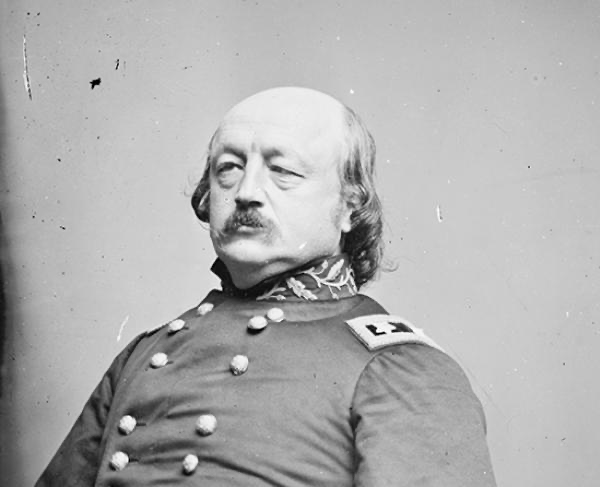
The Civil War: Benjamin F. Butler to Winfield Scott
One night in late May 1861, “three negroes”—who said they were field hands, slaves—delivered themselves to the picket line at Fort Monroe in Virginia. Fort Monroe, sat on the peninsula between the York River and James River, had at its helm Brigadier General Benjamin F. Butler. The fugitive slaves had come to the fort to…


-
The Civil War: William Howard Russell: from My Diary North and South
April 17, 1861 In the weeks and months leading up to the fall of Fort Sumter, the South had been brimming with excitement for the future. Charleston, South Carolina—with newly taken Fort Sumter in its harbor—was leading the South into that future both through its rhetoric and through its actions. Enthusiasm was abound for what…
-
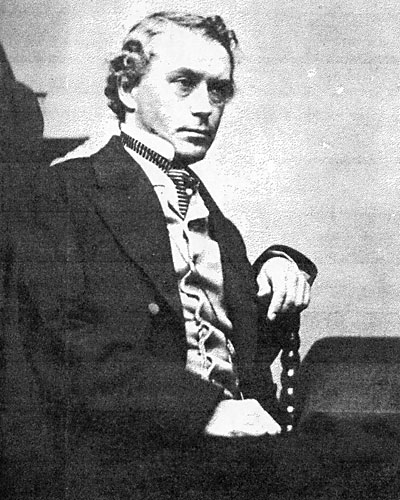
The Civil War: George Templeton Strong: Diary, April 13-16, 1861
Throughout the months leading up to the firing on Fort Sumter, there was widespread wonder about how the country would react to such a provocation; it was bound to be a cleave dividing the country and also its communities. Generations later—with the accordion of events neatly folded and the result of the war known—it would…
-
The Second Battle of Bull Run
After General George McClellan’s campaign to take Richmond fell flat, he became even more disenchanted with the Lincoln administration but vowed that if provided with 50,000 men, he would mount another attack on the Confederate front.[i] Whether a man who had “lost all regard and respect” for President Lincoln and had called the Lincoln administration…
-

McClellan’s Peninsula Campaign
General George McClellan, commanding 400 ships, 100,000 men, 300 cannons, and 25,000 animals, prepared to execute one of the greatest invasions in the history of the American military: a plan to take the Virginia Peninsula, a perceived weak point in the Confederacy, and march on Richmond.[i] He brought hope to his men that they would…
-
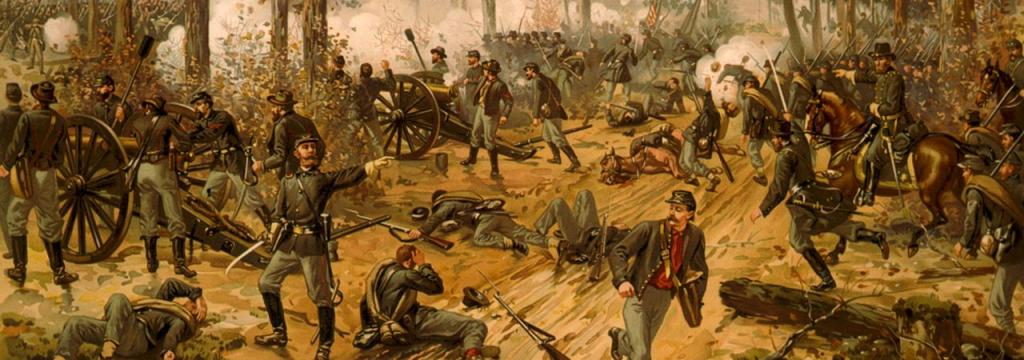
The Battle of Shiloh
Two of the greatest Confederate generals in early 1862, Albert Sidney Johnston and P.G.T. Beauregard, rendezvoused in Corinth, Mississippi with a combined 42,000 men.[i] The city not only could serve as an origin point of a campaign into nearby Tennessee; it also was the meeting point for the Confederacy’s “main north-south and east-west railroads.”[ii] Given…
-

Preparing for Invasion
From the Union perspective, the dawn of 1862 presented as good an opportunity as ever for an attack on Richmond. If successful, it could force the Confederacy into surrendering and negotiating its reconciliation with the federal government with the only question being the extent of the retribution for secession. However, to be a successful strike…
-
Constitution Sunday: “Publius,” The Federalist X
“Publius,” The Federalist X [James Madison] Daily Advertiser (New York), November 22, 1787 Following are excerpts from The Federalist X, authored by James Madison amidst the debates surrounding the ratification of the Constitution: “There are two methods of curing the mischiefs of faction: the one, by removing its causes; the other, by controling its effects. There are again…
-
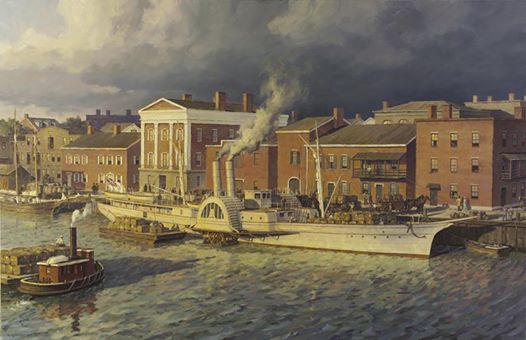
The Blockade Runners
Throughout the Civil War, the Union navy encircled the Confederacy’s ports and confiscated property that was entering or exiting the country in an effort to restrict the Confederate economy. While its full effect may be debated, it played a significant role in reducing the Confederacy’s foreign trade and consequently the strength of its economy and…

