-
Constitution Sunday: “Publius,” The Federalist LI [James Madison]
Independent Journal (New York) February 6, 1788 “But what is government itself but the greatest of all reflections of human nature?” This rhetorical question, which James Madison posed, is one that governments throughout the world—throughout history—have answered by showing that even the best-intentioned government fails where it does not take human nature into account.
-
The Civil War: Jefferson Davis: Message to the Confederate Congress
April 29, 1861 With only a few weeks at the helm of the Confederate government, president Jefferson Davis and the Confederate Congress had cause for concern—but also cause for inspiration. The whole of the South (and the whole of the North) was animated: men and women were mobilizing; making their preparations to contribute to the…
-
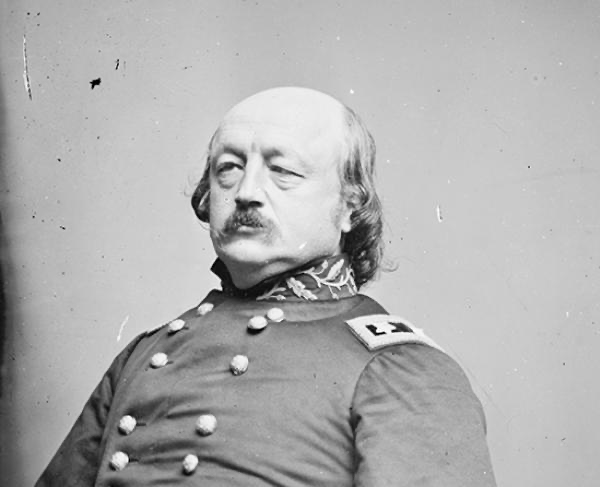
The Civil War: Benjamin F. Butler to Winfield Scott
One night in late May 1861, “three negroes”—who said they were field hands, slaves—delivered themselves to the picket line at Fort Monroe in Virginia. Fort Monroe, sat on the peninsula between the York River and James River, had at its helm Brigadier General Benjamin F. Butler. The fugitive slaves had come to the fort to…


-
The Civil War: William Howard Russell: from My Diary North and South
April 17, 1861 In the weeks and months leading up to the fall of Fort Sumter, the South had been brimming with excitement for the future. Charleston, South Carolina—with newly taken Fort Sumter in its harbor—was leading the South into that future both through its rhetoric and through its actions. Enthusiasm was abound for what…
-
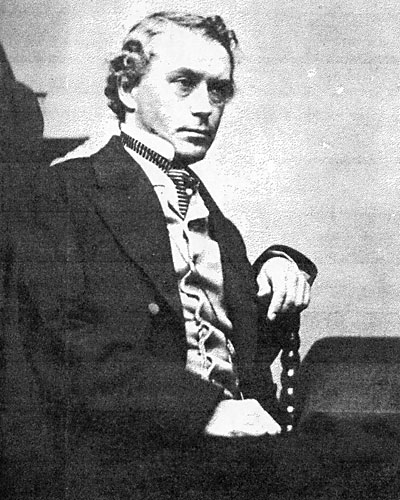
The Civil War: George Templeton Strong: Diary, April 13-16, 1861
Throughout the months leading up to the firing on Fort Sumter, there was widespread wonder about how the country would react to such a provocation; it was bound to be a cleave dividing the country and also its communities. Generations later—with the accordion of events neatly folded and the result of the war known—it would…
-
The Precursor to the Winter of Secession
Abraham Lincoln’s victory in the Election of 1860 was disconcerting news for the South. It was the most recent event in a string of events that seemingly endangered the southern way of life and the future of the country. At a time when many northerners suspected southern threats of secession were but a bluff, there was evidence that…
-
The Election of 1860
Every presidential election is consequential, but the Election of 1860 would play a significant role in whether the United States would remain one nation. The division of the North and South on the issue of slavery threatened to cause a secession of the South. The result of the election would determine whether that threat would materialize and cause…
-
The Obstinacy of the North and South
By 1859, the northern and southern sections of America had developed different economic systems, cultural norms, and approaches to permitting slavery. Congress and the political parties had been able to overlook those differences for the sake of self-preservation and advancement of the collective agenda. As 1859 concluded and 1860 sprang, Americans understood that the status quo…
-
The Raid on Harpers Ferry
For the bulk of the early 19th Century, slaveholders in the South had a deep fear that a slave revolt would erupt and metastasize, leading to an eradication of the institution, similar to what happened in Haiti in the first years of the 19th Century. In 1859, John Brown, one of the instigators in Bleeding…
-
Constitution Sunday: Answers to Mason’s “Objections”: “Marcus” [James Iredell] II
Answers to Mason’s “Objections”: “Marcus” [James Iredell] II Norfolk and Portsmouth Journal (Virginia), February 27, 1788 Following are excerpts from James Iredell’s responses to George Mason’s “Objections” to the Constitution: “IVth. Objection. The Judiciary of the United States is so constructed and extended, as to absorb and destroy the Judiciaries of the several States
-
The Lincoln-Douglas Debates of 1858
Senator Stephen Douglas had come into the political spotlight through his work in the Compromise of 1850 and the Kansas-Nebraska Act, which had temporarily held the country together but perpetuated the institution of slavery. Douglas, a Democrat, was a force to be reckoned with for keeping a seat in the United States Senate despite the…

