-
Constitution Sunday: “Publius,” The Federalist LI [James Madison]
Independent Journal (New York) February 6, 1788 “But what is government itself but the greatest of all reflections of human nature?” This rhetorical question, which James Madison posed, is one that governments throughout the world—throughout history—have answered by showing that even the best-intentioned government fails where it does not take human nature into account.
-
The Civil War: Jefferson Davis: Message to the Confederate Congress
April 29, 1861 With only a few weeks at the helm of the Confederate government, president Jefferson Davis and the Confederate Congress had cause for concern—but also cause for inspiration. The whole of the South (and the whole of the North) was animated: men and women were mobilizing; making their preparations to contribute to the…
-
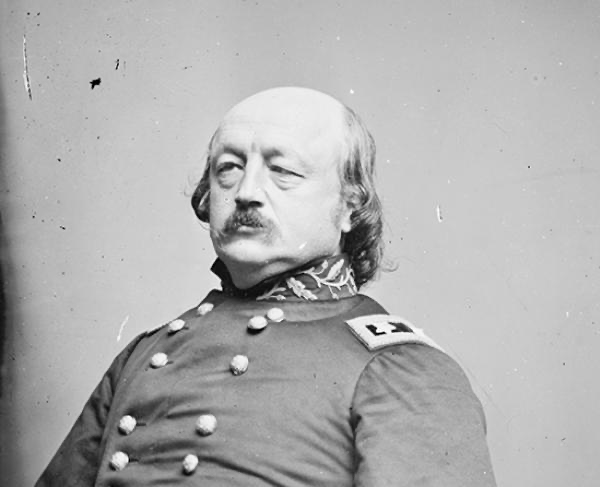
The Civil War: Benjamin F. Butler to Winfield Scott
One night in late May 1861, “three negroes”—who said they were field hands, slaves—delivered themselves to the picket line at Fort Monroe in Virginia. Fort Monroe, sat on the peninsula between the York River and James River, had at its helm Brigadier General Benjamin F. Butler. The fugitive slaves had come to the fort to…


-
The Civil War: William Howard Russell: from My Diary North and South
April 17, 1861 In the weeks and months leading up to the fall of Fort Sumter, the South had been brimming with excitement for the future. Charleston, South Carolina—with newly taken Fort Sumter in its harbor—was leading the South into that future both through its rhetoric and through its actions. Enthusiasm was abound for what…
-
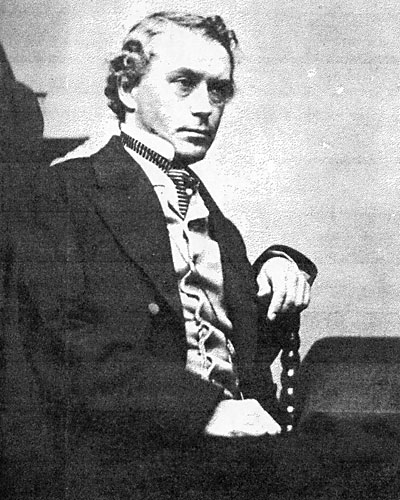
The Civil War: George Templeton Strong: Diary, April 13-16, 1861
Throughout the months leading up to the firing on Fort Sumter, there was widespread wonder about how the country would react to such a provocation; it was bound to be a cleave dividing the country and also its communities. Generations later—with the accordion of events neatly folded and the result of the war known—it would…
-
The Lecompton Constitution
Following the violence in Kansas known as Bleeding Kansas, there was a question of whether the territory would be admitted as a free state or slave state. After taking office in 1857, President James Buchanan appointed Robert J. Walker of Pennsylvania to be governor of Kansas. Governor Walker wrote a letter to President Buchanan, stating…
-
A Supreme Court Tragedy: Dred Scott v. Sandford
In 1857, the United States Supreme Court decided one of the most controversial cases in the history of the country. Just days after James Buchanan began his term as president, Chief Justice Roger Taney wrote the opinion for the Court, ruling that neither slaves nor freedmen could be citizens of the United States. The implications…
-
The Evolving Political Parties of the 1850s
The Democratic Party and Whig Party were the dominant political parties from the early 1830s up until the mid-1850s. Both were institutions in national politics despite not having a coherent national organization by cobbling together a diverse group of states to win elections. While the Democrats had a more populist agenda, the Whigs were more…
-
Bleeding Kansas
After the passage of the Kansas-Nebraska Act, William Seward proclaimed to the Senate that “[w]e will engage in competition for the virgin soil of Kansas, and God give the victory to the side which is stronger in numbers as it is in right.” Congressional Globe, 33 Cong., 1 sess., appendix, 769. Rather than settling the issue…
-
Halting Manifest Destiny
During 1854, while the Kansas-Nebraska Act was making its way through Congress and to President Franklin Pierce’s desk, there were significant developments throughout the country that would have lessen the manifest destiny fever that had captured the nation’s attention up to that point. One of the hallmarks of American progress was nearing its end.
-
Constitution Sunday: Answers to Mason’s “Objections”: “Marcus” [James Iredell] I
Answers to Mason’s “Objections”: “Marcus” [James Iredell] I Norfolk and Portsmouth Journal (Virginia), February 20, 1788 Following are excerpts from James Iredell’s responses to George Mason’s “Objections” to the Constitution: “IIId. [George Mason’s] Objection. ‘The Senate have the power of altering all money bills, and of originating appropriations of money, and the salaries of the officers…

