-
Constitution Sunday: “Publius,” The Federalist LI [James Madison]
Independent Journal (New York) February 6, 1788 “But what is government itself but the greatest of all reflections of human nature?” This rhetorical question, which James Madison posed, is one that governments throughout the world—throughout history—have answered by showing that even the best-intentioned government fails where it does not take human nature into account.
-
The Civil War: Jefferson Davis: Message to the Confederate Congress
April 29, 1861 With only a few weeks at the helm of the Confederate government, president Jefferson Davis and the Confederate Congress had cause for concern—but also cause for inspiration. The whole of the South (and the whole of the North) was animated: men and women were mobilizing; making their preparations to contribute to the…
-
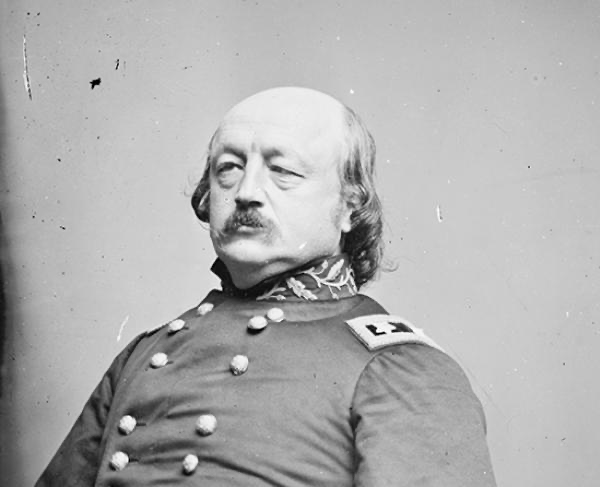
The Civil War: Benjamin F. Butler to Winfield Scott
One night in late May 1861, “three negroes”—who said they were field hands, slaves—delivered themselves to the picket line at Fort Monroe in Virginia. Fort Monroe, sat on the peninsula between the York River and James River, had at its helm Brigadier General Benjamin F. Butler. The fugitive slaves had come to the fort to…


-
The Civil War: William Howard Russell: from My Diary North and South
April 17, 1861 In the weeks and months leading up to the fall of Fort Sumter, the South had been brimming with excitement for the future. Charleston, South Carolina—with newly taken Fort Sumter in its harbor—was leading the South into that future both through its rhetoric and through its actions. Enthusiasm was abound for what…
-
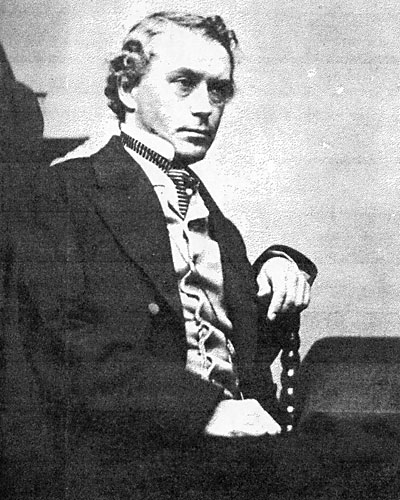
The Civil War: George Templeton Strong: Diary, April 13-16, 1861
Throughout the months leading up to the firing on Fort Sumter, there was widespread wonder about how the country would react to such a provocation; it was bound to be a cleave dividing the country and also its communities. Generations later—with the accordion of events neatly folded and the result of the war known—it would…
-
The Civil War: Abraham Lincoln to John A. Gilmer
Springfield, Illinois December 15, 1860 The outgoing president, James Buchanan, had delivered his lukewarm message of unity to the country. South Carolina wasn’t swayed; she continued her efforts to secede. The incoming president, Abraham Lincoln, had the opportunity to send to the country his own statement. Perhaps he still could save the Union without a…
-
Constitution Sunday: “Publius,” The Federalist XLVIII [James Madison]
New-York Packet February 1, 1788 James Madison, under the pseudonym Publius, wrote about the system of checks and balances housed in the draft Constitution—and how fragile they are. Those checks and balances are “a mere demarkation on parchment of the constitutional limits of the several departments”—those departments being the legislative, executive, and judicial. And the…
-
The Civil War: J.D.B. DeBow: The Non-Slaveholders of the South
Nashville, Tennessee December 5, 1860 J.D.B. DeBow had run into a friend on the street and talked with him about how, in the South, even non-slaveholders benefitted from the region’s slave labor system. Then, promising to expand on what he said, he wrote this friend a letter, setting out in detail—in ten points—those benefits. As…
-

The Civil War: James Buchanan: From the Annual Message to Congress
December 3, 1860 Washington City James Buchanan was never going to avert the Civil War. But in his annual message to Congress, after the election of 1860, he scarcely even tried. Whereas most outgoing presidents use their last days in power to begin shaping their legacy, reflect on their time at the helm, and share…
-
The Civil War: Frederick Douglass: The Late Edition
December 1860 Politicians walk a tightrope when they choose their positions on political issues, especially when it’s a thorny issue. And when critics attempt to pigeonhole a politician as an extremist, those critics often achieve exactly the opposite: that politician then essentially has license to choose any position except an extreme one—defying the critics and…
-
The Civil War: William G. Brownlow to R.H. Appleton
November 29, 1860 Knoxville, Tennessee When the United States faced the prospect of disunion, in the fall of 1860, there was virtually no precedent to which Americans could look. This wasn’t a matter of policy differences: states were debating whether to leave the Union. And many felt that it was inherently wrong and tried to…

