-
Constitution Sunday: “Publius,” The Federalist LI [James Madison]
Independent Journal (New York) February 6, 1788 “But what is government itself but the greatest of all reflections of human nature?” This rhetorical question, which James Madison posed, is one that governments throughout the world—throughout history—have answered by showing that even the best-intentioned government fails where it does not take human nature into account.
-
The Civil War: Jefferson Davis: Message to the Confederate Congress
April 29, 1861 With only a few weeks at the helm of the Confederate government, president Jefferson Davis and the Confederate Congress had cause for concern—but also cause for inspiration. The whole of the South (and the whole of the North) was animated: men and women were mobilizing; making their preparations to contribute to the…
-
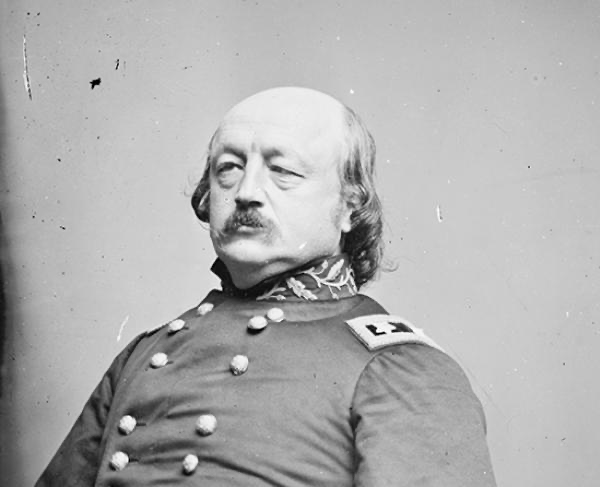
The Civil War: Benjamin F. Butler to Winfield Scott
One night in late May 1861, “three negroes”—who said they were field hands, slaves—delivered themselves to the picket line at Fort Monroe in Virginia. Fort Monroe, sat on the peninsula between the York River and James River, had at its helm Brigadier General Benjamin F. Butler. The fugitive slaves had come to the fort to…


-
The Civil War: William Howard Russell: from My Diary North and South
April 17, 1861 In the weeks and months leading up to the fall of Fort Sumter, the South had been brimming with excitement for the future. Charleston, South Carolina—with newly taken Fort Sumter in its harbor—was leading the South into that future both through its rhetoric and through its actions. Enthusiasm was abound for what…
-
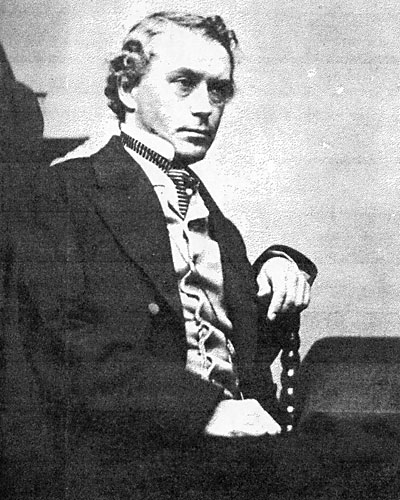
The Civil War: George Templeton Strong: Diary, April 13-16, 1861
Throughout the months leading up to the firing on Fort Sumter, there was widespread wonder about how the country would react to such a provocation; it was bound to be a cleave dividing the country and also its communities. Generations later—with the accordion of events neatly folded and the result of the war known—it would…
-
The Civil War: Benjamin Hill: Speech at Milledgeville
November 15, 1860 There is an assumption that people throughout the South were the only ones calling for a dissolution of the Union. This is a faulty assumption; there were people in the North who saw no potential for reconciliation and called for dissolution. Some people even argued that the Constitution’s acknowledgement of slavery was…
-
Constitution Sunday: “Publius,” The Federalist XLV [James Madison]
Independent Journal (New York) January 26, 1788 A nation comprised of states (or provinces) will inevitably have tension between the national government and each of the state governments. Most frequently, at the center of that tension is sovereignty; one state’s policy preference may be anathema to another state.
-

The Civil War: New-York Daily Tribune: Going to Go
November 9, 1860 One of the most famous newspapermen of his time, Horace Greeley, almost always had a sharp opinion, and with his newspaper, the New-York Daily Tribune, he had an audience. With the ubiquitous talk of secession during and after the election of 1860, Greeley had an opportunity to bring a more sober, well-reasoned…
-
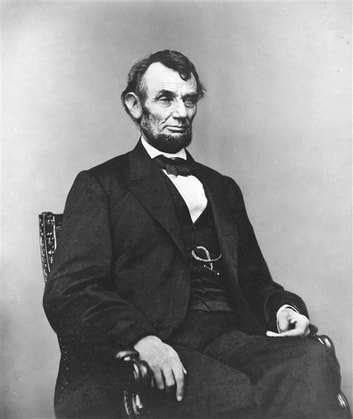
The Civil War: John G. Nicolay: Memoranda Regarding Abraham Lincoln
The Civil War: John G. Nicolay: Memoranda Regarding Abraham Lincoln
-
Constitution Sunday: “Publius,” The Federalist XLIV [James Madison] Part II
New-York Packet January 25, 1788 The Federalist XLIV [James Madison] Part II Article I, Section 8, Clause 18 of the Constitution has long sparked controversy, granting Congress the power to create necessary and proper laws to execute its other powers. James Madison, in the Federalist Papers, defended this provision against those who deemed it excessive.…
-

Building an American Empire
With the Civil War’s end, the United States had put itself back on course to become one of the leading economies in the world. Economic strength begets influence around the world, and America was no exception to this principle; it now was entering an era—an era that, as of the time of this writing, has…

