-
Constitution Sunday: “Publius,” The Federalist LI [James Madison]
Independent Journal (New York) February 6, 1788 “But what is government itself but the greatest of all reflections of human nature?” This rhetorical question, which James Madison posed, is one that governments throughout the world—throughout history—have answered by showing that even the best-intentioned government fails where it does not take human nature into account.
-
The Civil War: Jefferson Davis: Message to the Confederate Congress
April 29, 1861 With only a few weeks at the helm of the Confederate government, president Jefferson Davis and the Confederate Congress had cause for concern—but also cause for inspiration. The whole of the South (and the whole of the North) was animated: men and women were mobilizing; making their preparations to contribute to the…
-
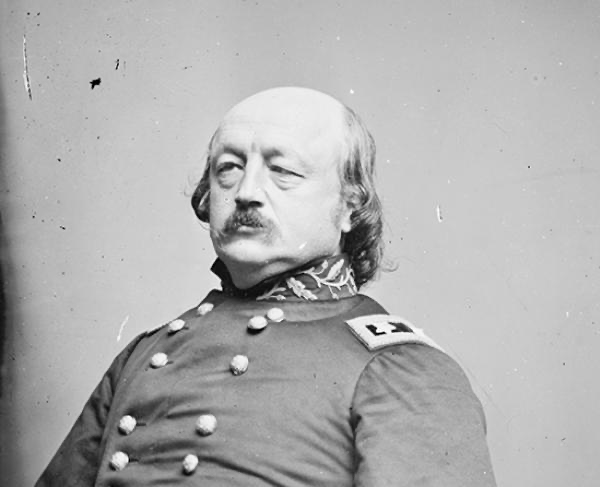
The Civil War: Benjamin F. Butler to Winfield Scott
One night in late May 1861, “three negroes”—who said they were field hands, slaves—delivered themselves to the picket line at Fort Monroe in Virginia. Fort Monroe, sat on the peninsula between the York River and James River, had at its helm Brigadier General Benjamin F. Butler. The fugitive slaves had come to the fort to…


-
The Civil War: William Howard Russell: from My Diary North and South
April 17, 1861 In the weeks and months leading up to the fall of Fort Sumter, the South had been brimming with excitement for the future. Charleston, South Carolina—with newly taken Fort Sumter in its harbor—was leading the South into that future both through its rhetoric and through its actions. Enthusiasm was abound for what…
-
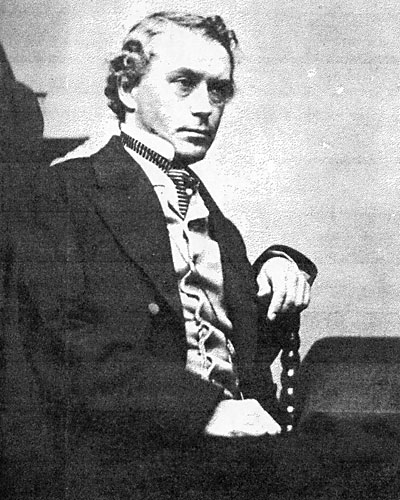
The Civil War: George Templeton Strong: Diary, April 13-16, 1861
Throughout the months leading up to the firing on Fort Sumter, there was widespread wonder about how the country would react to such a provocation; it was bound to be a cleave dividing the country and also its communities. Generations later—with the accordion of events neatly folded and the result of the war known—it would…
-
Constitution Sunday: “Publius,” The Federalist XLIV [James Madison] Part I
New-York Packet January 25, 1788 In a country comprised of states, there is bound to be overlap between what those states’ governments may do and what the federal government may do. But the draft Constitution clarified those boundaries and identified many of the rights that states have and don’t have. Crucially, the Constitution sets limits…
-
Constitution Sunday: “Brutus” X
New York Journal January 24, 1788 History is replete with military coups. At a time when a country’s government has grown weak, the temptation to make drastic change can become overwhelming. Sometimes, rather than wait for the next election, the military makes its move—to the detriment of the democracy, the people, and the chances for…
-
Constitution Sunday: “Centinel” [Samuel Bryan] XII
Independent Gazetteer (Philadelphia) January 23, 1788 When a group of people conspire, their interests are aligned to work toward a result and bring about that result. The reasons for participating in a conspiracy may be varied, but often, enriching oneself—either with money, influence, or power—is at the heart of it. Conspiracies are usually simple in…
-
Constitution Sunday: “Publius,” The Federalist XLIII [James Madison]
Independent Journal (New York) January 23, 1788 An effective government is supposed to take care of its people’s problems. To even pretend to take care of people’s problems, a government must learn of the problems. When problems arise in smaller countries, those governments are likelier than those in large countries to have their governments learn…
-
Constitution Sunday: “Publius,” The Federalist XLII [James Madison]
New-York Packet January 22, 1788 One myth that persists about the founding of the American republic is that those men involved in framing the Constitution did not sufficiently account for the problems that could arise from slavery continuing into the Nineteenth Century. In reality, many of those men sought a way to slowly phase out…