-
Constitution Sunday: “Publius,” The Federalist LI [James Madison]
Independent Journal (New York) February 6, 1788 “But what is government itself but the greatest of all reflections of human nature?” This rhetorical question, which James Madison posed, is one that governments throughout the world—throughout history—have answered by showing that even the best-intentioned government fails where it does not take human nature into account.
-
The Civil War: Jefferson Davis: Message to the Confederate Congress
April 29, 1861 With only a few weeks at the helm of the Confederate government, president Jefferson Davis and the Confederate Congress had cause for concern—but also cause for inspiration. The whole of the South (and the whole of the North) was animated: men and women were mobilizing; making their preparations to contribute to the…
-
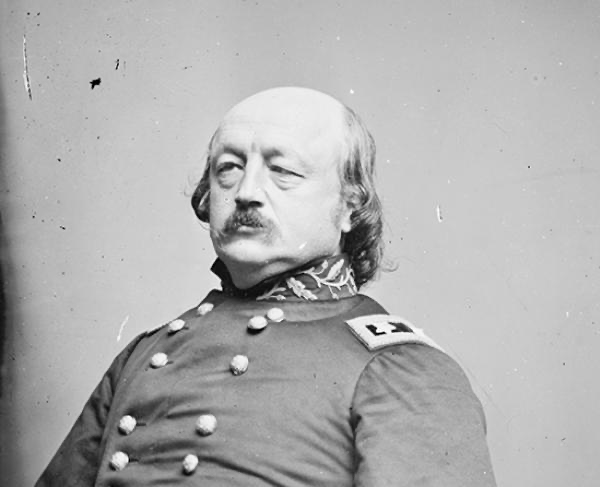
The Civil War: Benjamin F. Butler to Winfield Scott
One night in late May 1861, “three negroes”—who said they were field hands, slaves—delivered themselves to the picket line at Fort Monroe in Virginia. Fort Monroe, sat on the peninsula between the York River and James River, had at its helm Brigadier General Benjamin F. Butler. The fugitive slaves had come to the fort to…


-
The Civil War: William Howard Russell: from My Diary North and South
April 17, 1861 In the weeks and months leading up to the fall of Fort Sumter, the South had been brimming with excitement for the future. Charleston, South Carolina—with newly taken Fort Sumter in its harbor—was leading the South into that future both through its rhetoric and through its actions. Enthusiasm was abound for what…
-
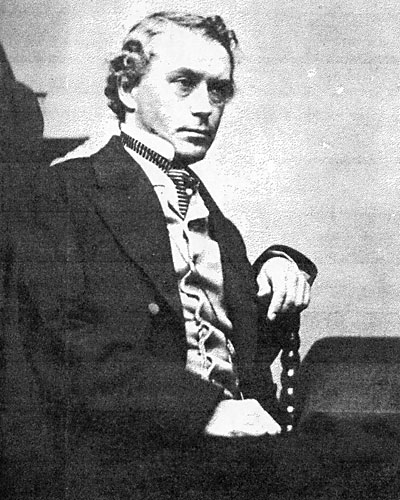
The Civil War: George Templeton Strong: Diary, April 13-16, 1861
Throughout the months leading up to the firing on Fort Sumter, there was widespread wonder about how the country would react to such a provocation; it was bound to be a cleave dividing the country and also its communities. Generations later—with the accordion of events neatly folded and the result of the war known—it would…
-
Constitution Sunday: Rawlins Lowndes and Edward Rutledge Debate in the South Carolina Legislature
January 16, 1788 A government must provide its people—all of its people, varied as they are—with a structure that fosters self-preservation. In the South, for a long stretch of time, that sense of self-preservation was crucial. There was no denying that the slave economy was central to its existence that it was therefore always going…
-

Constitution Sunday: On The Likely Failure Of Liberty, Robert Yates and John Lansing, Jr., to Governor George Clinton
January 14, 1788 Daily Advertiser (New York) Revising the Articles of Confederation was always going to be a difficult task. The system that the Articles erected was one where the states pulled the strings of a marionette puppet of a federal government; without the states, the federal government was nothing: for instance, although the Confederation…
-

The Legend of Winfield Scott Hancock
War heroes earn respect through their service. The Civil War brought out more heroes than perhaps any other war in American history. They were men who served their country at its inflection point, and they could be assured that their time on the battlefield could translate to time in public office. General Winfield Scott Hancock…
-

The Rise of James Garfield
It was a time of oratory and a time when Ohioans became President. James Garfield was a product of the time. He was born into “a poor family” and “an intellectual in love with books.”[i] He attended the Western Reserve Eclectic Institute as a student and janitor, and by the following year, he became an…

