-
Constitution Sunday: “Publius,” The Federalist LI [James Madison]
Independent Journal (New York) February 6, 1788 “But what is government itself but the greatest of all reflections of human nature?” This rhetorical question, which James Madison posed, is one that governments throughout the world—throughout history—have answered by showing that even the best-intentioned government fails where it does not take human nature into account.
-
The Civil War: Jefferson Davis: Message to the Confederate Congress
April 29, 1861 With only a few weeks at the helm of the Confederate government, president Jefferson Davis and the Confederate Congress had cause for concern—but also cause for inspiration. The whole of the South (and the whole of the North) was animated: men and women were mobilizing; making their preparations to contribute to the…
-
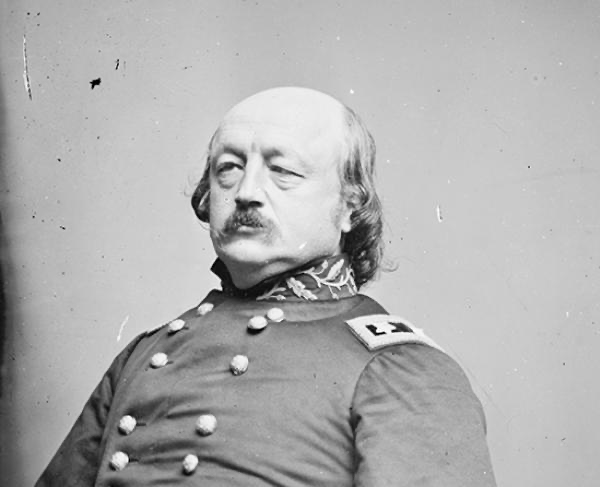
The Civil War: Benjamin F. Butler to Winfield Scott
One night in late May 1861, “three negroes”—who said they were field hands, slaves—delivered themselves to the picket line at Fort Monroe in Virginia. Fort Monroe, sat on the peninsula between the York River and James River, had at its helm Brigadier General Benjamin F. Butler. The fugitive slaves had come to the fort to…


-
The Civil War: William Howard Russell: from My Diary North and South
April 17, 1861 In the weeks and months leading up to the fall of Fort Sumter, the South had been brimming with excitement for the future. Charleston, South Carolina—with newly taken Fort Sumter in its harbor—was leading the South into that future both through its rhetoric and through its actions. Enthusiasm was abound for what…
-
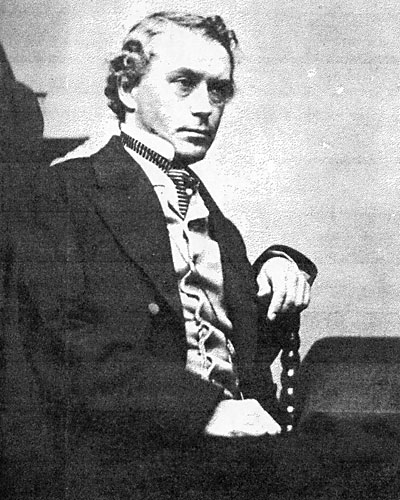
The Civil War: George Templeton Strong: Diary, April 13-16, 1861
Throughout the months leading up to the firing on Fort Sumter, there was widespread wonder about how the country would react to such a provocation; it was bound to be a cleave dividing the country and also its communities. Generations later—with the accordion of events neatly folded and the result of the war known—it would…
-
Constitution Sunday: “Americanus” [John Stevens, Jr.] VII
Daily Advertiser (New York) January 21, 1788 With the draft Constitution being circulated and reviewed by throughout the country, Governor Edmund Randolph of Virginia wrote a letter to the Speaker of the House of Delegates detailing his objections—of which there were many—to adopting the Constitution as written. Given his stature as a governor, his objections…
-
The Hunt for Jefferson Davis
The president was on the run. He hadn’t just gotten away; he had been evading his pursuers for some time. This man had been the president of the Confederacy, and now he was the most wanted man in the country, overseeing the few remaining people and things that belonged to the breakaway country. By this…
-
Constitution Sunday: “Publius,” The Federalist XLI [James Madison]
Independent Journal (New York) January 19, 1788 Engineering a coup can be difficult. Usually, it requires a military to not only lose faith in the civilian government but to organize an overthrowing of that government. Democratic republics fear this prospect as much as any other type of government. Although democratic republics are better suited for…
-
Constitution Sunday: “An Old State Soldier” I
Virginia Independent Chronicle (Richmond) January 16, 1788 A former soldier sought to inform his fellow Virginians about the merits of the draft Constitution, and his fellow Virginians would be incorrect if they assumed that he was merely a soldier and would know nothing about the wisdom needed for setting up a new government. He described…
-
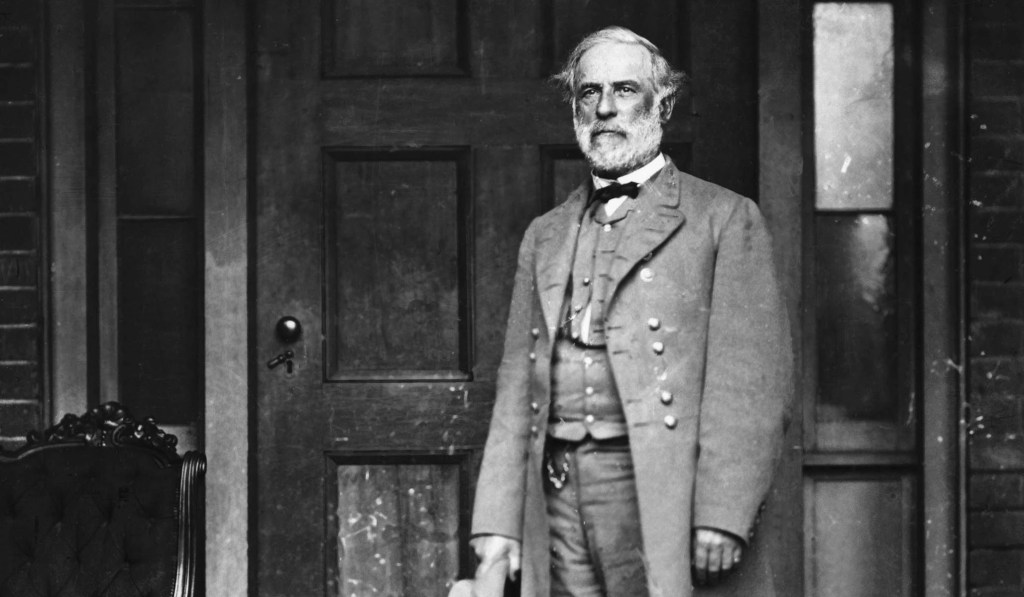
The Legacy of Robert E. Lee
No figures in American history earn universal admiration. As years—and generations—pass, legacies change. As morals, priorities, and political issues evolve, so do understandings of those people in the past who brought change—good, bad, or otherwise—to the country. For some figures, like Abraham Lincoln, whose authentic genius is admired generation after generation, their merit is questioned…
-
![Constitution Sunday: “Publius,” The Federalist XXXIX [James Madison]](https://lastbesthopeofearth.com/wp-content/uploads/2025/05/fa8c7-james_madison_by_gilbert_stuart.jpeg?w=1024)
Constitution Sunday: “Publius,” The Federalist XXXIX [James Madison]
Independent Journal (New York) January 16, 1788 The power of a government—and the supremacy of that power—often is tied to the ways in which it can reach the people’s lives. A federal government inherently raises concerns about overreach, and the draft Constitution’s proposed federal government evoked a question of whether it would be an all-powerful…

