-
Constitution Sunday: “Publius,” The Federalist LI [James Madison]
Independent Journal (New York) February 6, 1788 “But what is government itself but the greatest of all reflections of human nature?” This rhetorical question, which James Madison posed, is one that governments throughout the world—throughout history—have answered by showing that even the best-intentioned government fails where it does not take human nature into account.
-
The Civil War: Jefferson Davis: Message to the Confederate Congress
April 29, 1861 With only a few weeks at the helm of the Confederate government, president Jefferson Davis and the Confederate Congress had cause for concern—but also cause for inspiration. The whole of the South (and the whole of the North) was animated: men and women were mobilizing; making their preparations to contribute to the…
-
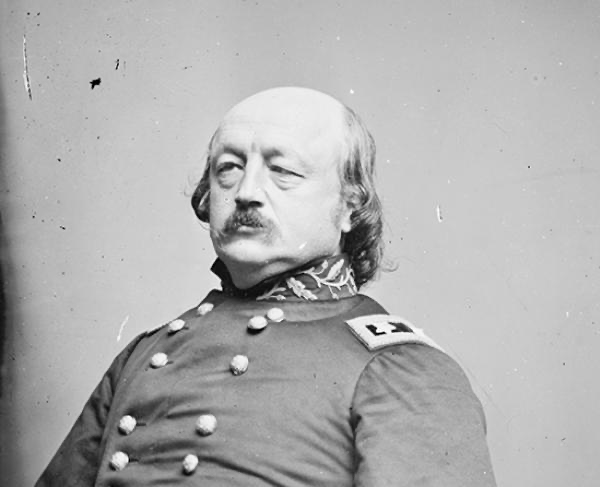
The Civil War: Benjamin F. Butler to Winfield Scott
One night in late May 1861, “three negroes”—who said they were field hands, slaves—delivered themselves to the picket line at Fort Monroe in Virginia. Fort Monroe, sat on the peninsula between the York River and James River, had at its helm Brigadier General Benjamin F. Butler. The fugitive slaves had come to the fort to…


-
The Civil War: William Howard Russell: from My Diary North and South
April 17, 1861 In the weeks and months leading up to the fall of Fort Sumter, the South had been brimming with excitement for the future. Charleston, South Carolina—with newly taken Fort Sumter in its harbor—was leading the South into that future both through its rhetoric and through its actions. Enthusiasm was abound for what…
-
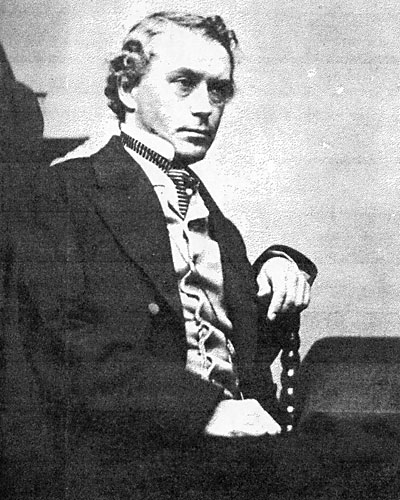
The Civil War: George Templeton Strong: Diary, April 13-16, 1861
Throughout the months leading up to the firing on Fort Sumter, there was widespread wonder about how the country would react to such a provocation; it was bound to be a cleave dividing the country and also its communities. Generations later—with the accordion of events neatly folded and the result of the war known—it would…
-
The Battle of Wilson’s Creek
The First Battle of Bull Run, which was fought near Manassas, Virginia, inaugurated the Eastern Theater of the Civil War. Weeks later, the first major battle of the Western Theater would occur on the banks of a creek in Missouri: Wilson’s Creek. The battle resulted in another Confederate victory and the first death of a…
-
Constitution Sunday: “Cato” V
“Cato” V New York Journal, November 22, 1787 Following are excerpts from an anonymous article published in the New York Journal: “To the Citizens of the State of New-York. In my last number I endeavored to prove that the language of the article relative to the establishment of the executive of this new government was vague and inexplicit, that…
-

The Preparedness of the Union and Confederacy
At the outset of the Civil War, the discrepancies between the Union and Confederate armies were evident. Despite their differences in background and appearance, both sides were poised to not only revolutionize the American method of warfare but also to change life for civilians throughout the country.
-
The First Battle of Bull Run
Three months after the firing on Fort Sumter, the Confederacy and Union had produced armies capable of fighting and mobilized to northern Virginia; roughly halfway between Washington and Richmond. There, near a “sluggish, tree-choked river” known as Bull Run, the first major battle following the secession of the South would occur.[i]
-

On to Richmond
Although the Confederacy had awakened the North’s spirit by initiating hostilities at Fort Sumter, both sides could have still hoped for reconciliation. While some advocated for immediate peace, others wished for a full prosecution of war against the South, viewing its expanding secession as nothing short of treason. By the end of spring 1861, there…
-

The Awakened Giant
The news from Fort Sumter spread throughout the country, and its coming awakened a restless energy in the North. That energy ignited patriotism and a new sense of collectivism throughout northern cities and states that would lead to a then-unparalleled war effort directed against the Confederacy.
 Last Best Hope of Earth